
While The Lease Holds
Flat prices fell 0.1%. One-tenth of a percent! And Singapore lost its mind?
At ReadOn, we don’t just report the markets. We help you understand what truly drives them, so your next decision isn’t just informed, it’s intelligent.
“Merdeka Gen-Z.”
This tag has been making rounds on X lately. Merdeka: it means independence. And the Singaporean youth are celebrating like they’ve just broken free from something.
What exactly set them off?
HDB resale prices dropped 0.1%. First time in seven years.
One tenth of one percent.
What feels like a rounding error to the rest of the world feels like liberation to an entire generation. And here’s the part that makes it even more telling: they’re celebrating a dip in “resale” prices. Not freshly built homes. Second-hand flats, changing hands between private owners.
And it gets stranger.
HDB flats aren’t your typical real estate. These are government-subsidized public housing, built and managed by Singapore’s Housing & Development Board, specifically designed to give ordinary people a shot at owning a home.
So why is the youth of a country celebrating a 0.1% dip in the resale price of... subsidized government housing?
Because in 2025, 1,594 of those flats sold for over S$1 million. Three years ago, that number was 369.
Public housing. A million dollars.
This isn’t just a housing story. It’s a tale about what happens when one of the world’s most successful public housing experiments starts to transform from a social safety net into… well, a wealth-creation machine. And whether that’s a good thing depends entirely on who you ask.
The Man Who Built Vertical Villages
To understand how we got here, let’s rewind to the 1960s and meet Liu Thai Ker, Singapore’s “Father of Urban Planning.” Liu, who passed away in early 2026, had a deceptively simple vision: turn high-rise apartment blocks into something that felt like the kampongs (traditional Malay villages) people were leaving behind.
Think about that for a second. How do you recreate the warmth of a village where everyone knows everyone, where kids play together on open grounds, where neighbors actually talk to each other… in a 20-story concrete tower?
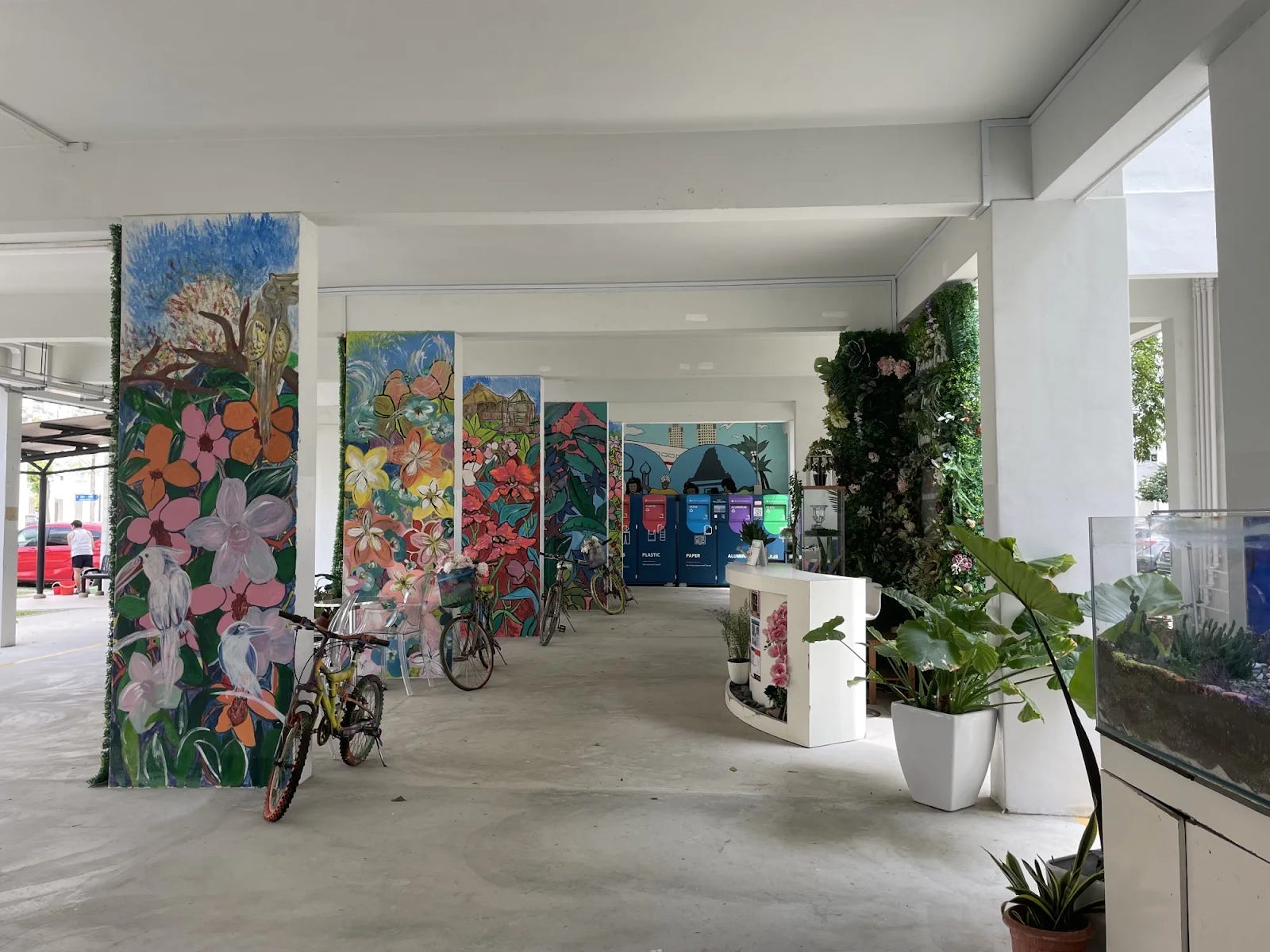
Liu’s answer was brilliant. He designed wide corridors for people to bump into each other. He created void decks, those empty ground floors you see in HDB blocks, where residents could gather, celebrate weddings, or just hang out. He insisted on hawker centres within walking distance, painted buildings in bright pastels reminiscent of kampong houses, and famously declared that each block should be “as beautiful as Miss Universe.”
Over his career, Liu designed more than 500,000 flats across 20 new towns. Today, roughly 3.19 million people, about 75% of Singapore’s population, live in HDB flats. And here’s the kicker: over 90% of Singaporean households own their home.
For context, India’s homeownership rate is around 87%, the US sits at about 66%. Singapore has basically achieved near-universal homeownership through public housing. It’s extraordinary.
The system is elegantly simple. First, you can only buy new HDB flats if you’re a Singapore citizen. Second, the government uses your CPF, a mandatory pension savings scheme where a chunk of your salary gets automatically deducted to help you pay for your flat. Third, there are generous grants for first-time buyers, especially for lower-income families.
The result? Entry-level flats become genuinely affordable. In 2024, the median HDB price was about 4.3 times the median household income. That’s below the 5x threshold that urban planners consider “attainable.”
Compare that to private condos in Singapore, which cost about 16.9 times median income, and you see why HDB flats are such a lifeline for most Singaporeans.
But there’s a catch, actually, several catches.
You generally need to be married to buy a new HDB flat (though some rules have been relaxed for singles above 35). There’s a 5-year minimum occupation period before you can sell. And the government uses ethnic integration quotas to prevent neighborhood segregation, which means your ability to buy in certain areas depends on your race.
It’s social engineering, no doubt about it. But it’s created some of the world’s most integrated, stable neighborhoods.
When Subsidies Meet Market Realities
Because after that 5-year period, you can sell your HDB flat on the open resale market. And over the past decade, resale prices have been climbing. By 2023, they were 55% higher than the 2019 trough. In 2025, prices grew another 2.9% overall.
But dig deeper, and you see a tale of two markets emerging.
On one end, you have regular 3-room and 4-room flats in newer towns, where prices are rising but still relatively accessible. On the other end, you have large 4-room and 5-room flats in mature estates, places like Toa Payoh, Bishan, or Queenstown, where prices have gone completely wild.

These “premium” flats are the ones fetching over a million dollars. In 2025, they accounted for about 6% of all transactions. Small percentage, sure. But the trend is unmistakable and accelerating.
Why are people paying so much for subsidised housing?
Several reasons. First, Covid-19 construction delays meant new flats take 5-6 years to complete instead of the usual 3 years. If you can’t wait that long, you turn to the resale market. Second, certain mature estates have excellent locations, great schools, and established amenities. Third, and this is crucial: many Singaporeans now view their HDB flat not just as a home, but as their primary store of wealth.
Liu Thai Ker himself noticed this shift and worried about it. The system, he noted, seemed to be morphing “from meeting needs to a kind of business venture.”
And there’s the rub. When subsidized housing becomes an investment asset, who wins and who loses?
The Young, The Single, and The Future
If you’re a young Singaporean today, here’s your reality: Marriage rates are falling in 2024 it was lower than 7% YoY. More people are staying single or delaying marriage. But the HDB system was built for married couples with kids.
Singles under 35 are largely shut out of new flat purchases. By the time they qualify at 35, they’re competing with married couples who have priority and better grant access. And if they turn to the resale market, they’re staring at prices that have outpaced income growth.
Meanwhile, the backlog of Build-To-Order applicants keeps growing. In 2025, there were 26,169 resale transactions, people who couldn’t or wouldn’t wait for their new flats.
(And now you know why Gen-Z celebrated a 0.1% drop. Sometimes, direction matters more than distance).
The government has responded. They’ve pledged to build about 50,000 new flats between 2025-2027, with some “shorter-wait” projects ready in 2-3 years. They’ve increased grants for low and middle-income buyers. They’ve tightened rules on multiple purchases to curb speculation.
But here’s the bigger, structural problem looming on the horizon: lease decay.
Every HDB flat is sold on a 99-year lease. When the lease expires, the flat reverts to the government. No exceptions.
This was never meant to be a problem because the first HDB blocks were built in the 1960s. But we’re now approaching the 2060s. Within a few decades, thousands of flats will enter their final 30-40 years. Their value will start dropping and who wants to buy a flat with only 20 years left on the lease?
Liu himself reminded Singaporeans: “After 99 years, the flat goes back to the government.”
Policymakers are now scrambling to figure out solutions. Selective en-bloc redevelopment? Lease buyback schemes? Compensation for aging blocks? None of it is easy, and all of it costs money.
The demographic shift compounds this. Smaller households mean flat designs need updating. An aging population means accessibility matters more. The traditional family-focused allocation system will need reform.
So What Now?
Singapore’s public housing program remains a remarkable achievement. It’s given millions of people quality homes, created stable communities, and delivered broad-based wealth accumulation. From shanty towns to one of the world’s highest homeownership rates in just 60 years, that’s genuinely impressive.
But the system is at a crossroads.
The original vision of affordable homes for all, is bumping against a new reality. Housing is been increasingly treated as an investment asset.
The challenge isn’t just about building more units or tweaking grants. It’s about recalibrating the entire philosophy. Should HDB flats primarily be homes or assets? Can they be both? And if you choose one over the other, who benefits and who gets left behind?
For now, Singapore is trying to thread the needle: increase supply to cool prices, provide more support for first-timers, and slowly adapt rules for changing demographics. Whether this works will determine if Liu Thai Ker’s “vertical kampongs” can remain a model of inclusive urban planning… or become a cautionary tale about what happens when social housing meets runaway markets.
Because here’s the uncomfortable truth: Once people’s primary wealth is tied up in their homes, keeping prices high becomes a political imperative. And affordable housing? That becomes much, much harder to deliver.