
When the Gulf Gets Cold Feet
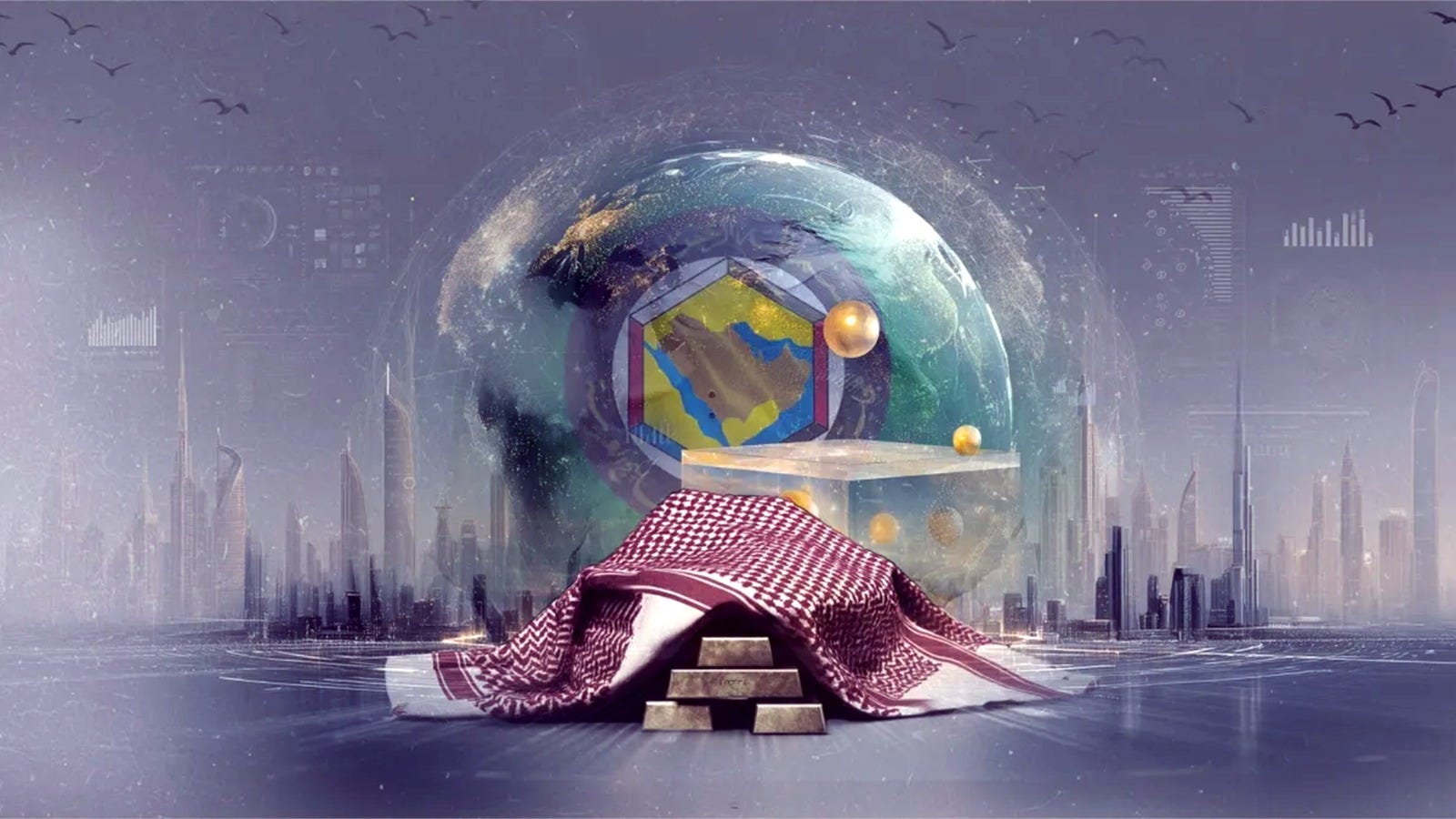
The Gulf went full steam ahead with it's investments, but now it's running out of gas.
At ReadOn, we don’t just report the markets. We help you understand what truly drives them, so your next decision isn’t just informed, it’s intelligent.
That’s how much five Gulf sovereign wealth funds deployed in 2024 alone. From buying Electronic Arts for $55 billion to funding green hydrogen projects to snapping up London’s Heathrow Airport, these funds have been the world’s most aggressive dealmakers.
And now? They’re actively reviewing whether they can invoke force majeure clauses in existing contracts. We’re talking about Saudi Arabia, the UAE, Kuwait, and Qatar. These are countries whose sovereign wealth funds collectively control over $5 trillion in assets.
The trigger? Iranian missiles striking Saudi Aramco’s biggest oil refinery and Qatar’s main LNG facility following the US-Israel strikes on Iran. Oil prices surged 20% in days. Tourism collapsed. Defence spending skyrocketed. And suddenly, the world’s richest investment vehicles are reconsidering deals from London to Los Angeles.
Let’s learn more about the wealth of the Gulf.
The Rainy Day Funds That Became Rainmakers
Let’s start with the basics. What exactly is a sovereign wealth fund?
Think of it as a country’s savings account on steroids. When oil-rich nations earn more from energy exports than their governments need to spend, they don’t just park that money in a checking account. They create investment funds to turn those petrodollars into long-term wealth, buying everything from Manhattan skyscrapers to Manchester United to cutting-edge semiconductor companies.
The concept isn’t new. Kuwait created the world’s first sovereign wealth fund, the Kuwait Investment Authority, back in 1953. And when Iraqi forces invaded in 1990, KIA’s London-based arm effectively became the country’s ministry of finance, organizing transfers to the government in exile. These funds were built for existential emergencies just like these.
But the modern era of sovereign wealth funds really took off in the 2000s. As oil prices surged between 2002 and 2008, Gulf nations stopped simply buying US Treasury bonds and started hunting for higher returns and strategic influence. Today, the Gulf Cooperation Council’s “Oil Five” dominate global dealmaking:
Saudi Arabia’s Public Investment Fund (PIF): $1.15 trillion
Abu Dhabi’s ADIA: $1.11 trillion
Kuwait’s KIA: Just crossed $1 trillion
Abu Dhabi’s Mubadala: Around $330 billion
Qatar’s QIA: Approximately $557 billion
Together, these five funds deployed over $110 billion in 2024 alone. That’s more than the entire German government’s annual public investment budget.
From Oil Wells to Electronic Arts
Where does all this money go? Everywhere.
In 2025, PIF and a consortium led by Jared Kushner’s Affinity Partners acquired Electronic Arts for $55 billion. It was one of the largest gaming industry takeovers ever. PIF also owns Newcastle United in the Premier League and backed LIV Golf, the upstart league challenging the PGA Tour. Qatar’s QIA, through its subsidiary Qatar Sports Investments, has owned Paris Saint-Germain since 2011, transforming it into a global football powerhouse.
But sports and entertainment are just the sexy headlines. The real money flows into infrastructure, technology, and renewable energy.
Mubadala’s AI subsidiary MGX is reportedly in talks to acquire Aligned Data Centers in a deal potentially worth $40 billion. PIF is a cornerstone investor in the NEOM Green Hydrogen Company, developing what could be the world’s largest green hydrogen project. In October 2025, Abu Dhabi’s Lunate partnered with Blackstone to launch a $5 billion logistics platform across the Gulf.
The strategy is clear. Use oil money today to own the industries of tomorrow. Because these funds know that oil won’t last forever, and neither will their current revenue streams. And this knowledge is turning more true as wars threaten these oil barons.
When the Foundation Starts Shaking
Which brings us to February 28, 2026.
That’s when the US and Israel launched coordinated strikes on Iranian nuclear facilities under Operation Epic Fury. Iran retaliated by targeting US bases across the Gulf and, more significantly, by attacking the energy infrastructure that generates the revenues funding these sovereign wealth funds.
Qatar declared force majeure (a clause in a contract evoked when unforeseeable circumstances prevent someone from fulfilling it) after a drone strike on its main LNG facility. Saudi Aramco’s largest domestic refinery was hit. And with the Strait of Hormuz effectively closed, oil and gas exports, the lifeblood of Gulf budgets, ground to a near halt.
Saudi Arabia required crude prices above $94 per barrel to meet 2025 expenditures. Actual prices averaged just $69. The kingdom ran a 276 billion riyal ($73.5 billion) budget deficit last year.
Now add:
Declining energy revenues from production shutdowns
Tourism and aviation activity collapsing
Massive defence spending increases
Supply chain disruptions for everything from food to medicines
According to JPMorgan’s analysis, they’ve already cut growth forecasts for non-oil sectors across the GCC by 1.2 percentage points, with the UAE seeing the steepest revision of 2.3 percentage points.
That’s when the Financial Times reported something unprecedented, Gulf officials discussing whether to invoke force majeure clauses in investment contracts and reviewing future commitments “to alleviate some of the anticipated economic strain.”
India’s $100 Billion Question Mark
And that brings us to India.
Over the past few years, Gulf sovereign wealth funds have become major backers of India’s digital economy. The investments read like a who’s who of Indian tech:
QIA has stakes in Swiggy (food delivery), Rebel Foods (cloud kitchens), VerSe Innovation (local language tech), and Flipkart (e-commerce).
Saudi PIF holds an estimated $1.5 billion in Jio Platforms and around $1.3 billion in Reliance Retail. India even considered waiving the 10% FDI cap specifically for PIF.
Abu Dhabi’s ADIA has invested in MobiKwik (fintech) and DealShare (social commerce). The fund even opened an office in Gujarat’s GIFT City to oversee current and future Indian investments.
Mubadala partnered with BlackRock to fund Tata Power Renewable Energy’s expansion plans.
2026 was supposed to be a landmark year for cashing in on these bets. Companies like Reliance Jio, Flipkart, and PhonePe with significant Gulf SWF backing are planning IPOs that could collectively raise nearly $20 billion.
But what happens if the war drags on and Gulf funds need to raise cash domestically instead of deploying it internationally? What if they invoke force majeure on future commitments or slow down follow-on investments in their Indian portfolio companies?
The ripple effects could be significant. Indian startups have increasingly relied on Gulf capital as Chinese investment dried up and Silicon Valley became more cautious. In 2023, GCC investments in technology and AI sectors targeting India and Southeast Asia surged, with dedicated teams and regional offices set up specifically to capture Indian opportunities.
All of that momentum hits a wall if the funds shift from expansion mode to preservation mode.
The Takeaway
Sovereign wealth funds are ultimately tools of state policy, not just investment vehicles chasing returns.
When Gulf states are discussing investment reviews because of war pressures, the first priority isn’t maximizing returns. It’s the security of citizens and supply chains.
So every startup founder counting on Gulf capital should know that when push comes to shove, these aren’t just investors. They’re instruments of national survival.
For India, the calculus is delicate. The country has positioned itself as a neutral player, maintaining relations with both the West and Russia, engaging diplomatically with Iran while deepening ties with the Gulf. That strategic ambiguity has attracted capital from all sides.
But if Gulf states start viewing every investment through a security lens, then India’s neutrality could cut both ways.
The next few months will tell us whether these sovereign wealth funds were truly built for a rainy day, or whether this particular storm is bigger than anyone anticipated. And whether India’s digital economy continues riding the Gulf capital wave, or learns to swim in choppier waters.
Until next time, ReadOn!