
The Small vs Big Car Battle
As CAFE-3 norms get closer to approval, there's a problem brewing between various car manufacturers.

At ReadOn, we don’t just report the markets. We help you understand what truly drives them, so your next decision isn’t just informed, it’s intelligent.
In November, something unusual happened at a meeting of India’s top auto executives. The Society of Indian Automobile Manufacturers (SIAM) — the industry’s most influential lobby group — put a proposal to vote. The question was simple: should small cars get special treatment under upcoming emission rules?
The result wasn’t even close. Fifteen of nineteen carmakers voted no. Only Maruti Suzuki and Renault raised their hands in favour.
And just like that, India’s automobile industry found itself in the middle of its most controversial policy battle in years. Let’s understand what’s going on!
The Rule That Started It All
To understand what’s happening, we need to talk about something called CAFE norms. Short for Corporate Average Fuel Efficiency, these rules don’t care about individual cars. They care about averages.
Here’s how it works. Every year, the government looks at all the cars a manufacturer sells in India. It calculates the average carbon dioxide emissions across this entire fleet. If that number is too high, the company pays a penalty. A big one.
Under the current CAFE-2 rules, carmakers must keep their fleet average below 113 grams of CO2 per kilometre. That’s already tough. But from April 2027, CAFE-3 kicks in with a target of 91.7 grams per kilometre, nearly 19% lower. And by 2032, CAFE-4 will push this down further to just 70 grams per kilometre.

These aren’t suggestions. They’re mandates backed by serious financial consequences. When the Energy Conservation Act was amended in December 2022, penalties became severe: ₹25,000 for every vehicle sold if a company misses its target by a small margin, and ₹50,000 per vehicle for larger shortfalls. To put this in perspective, Hyundai reportedly faced a penalty of ₹2,800 crore, roughly 60% of its FY23 profits, for falling short.
So carmakers are understandably anxious. The question is: how do you hit these targets?
The Weight Problem
This is where things get mathematically interesting, and politically messy.
India’s CAFE formula is weight-based. The heavier your car, the more CO2 it’s allowed to emit. A 1,500-kg SUV might get a target of 104 grams per kilometre under CAFE-3. A 900-kg hatchback? Just 76 grams per kilometre.
On the surface, this seems fair. Bigger cars naturally burn more fuel. But here’s the catch. The formula is linear, which means lighter cars face proportionally tougher cuts.
Here’s an example to understand this better. Under CAFE-3, both the 900-kg hatchback and the 1,500-kg SUV need to reduce emissions by about 28-29 grams per kilometre from current levels. In absolute terms, that’s identical. But in percentage terms, the small car must cut emissions by 27%, while the SUV needs only a 22% reduction.
As targets get progressively stricter through 2032, this gap widens. The small car gets squeezed harder, even though it already pollutes less in absolute terms.
A Nomura study released in July flagged this as a “structural bias” benefiting heavier vehicles. And almost every major auto market in the world has figured this out. The United States, China, Japan, South Korea, and the European Union all build some form of small-car protection into their emission frameworks.
India’s framework has no such adjustment.
One Company’s Problem, Or Everyone’s?
This brings us to the heart of the controversy.
Maruti Suzuki sells more small cars than anyone else in India. Models like the Alto, WagonR, Swift, Dzire, Eeco, and Fronx all weigh under 1,000 kg. These small cars account for roughly 65% of the company’s domestic volumes.
So when the Bureau of Energy Efficiency (BEE) released a second draft of CAFE-3 norms in September, incorporating a weight-based exemption for the first time, it set off alarms. The proposal offered a 3 grams per kilometre deduction for petrol cars weighing under 909 kg, with engine capacity below 1,200 cc and length under 4 metres.
According to a letter by JSW MG Motor to Union Power Minister Manohar Lal Khattar, dated November 21, vehicles under 909 kg make up about 15% of total car sales. And over 95% of those cars come from a single manufacturer: Maruti.
For Maruti, this would be a lifeline. For everyone else, it looked like a policy tailored for one company.
JSW MG Motor didn’t mince words in their letter to the Union Power Minister. The exemption, it argued, would “disproportionately benefit” a single manufacturer and distort “market competition”. The company warned that such relief “risks weakening efforts” to cut India’s dependence on imported crude and could slow technological progress in a segment where efficiency gains are most needed.
Tata Motors’ Shailesh Chandra, who also heads SIAM, called the weight-based criterion “arbitrary” at a press conference on November 12. He pointed out that several models priced around ₹10 lakh sit just above the 909 kg limit. With minor weight reductions pricier vehicles could qualify for the exemption. The relief wouldn’t necessarily reach lower-income buyers at all. The weight reductions could potentially be made by cutting safety-related components. And safety is a big concern with these upcoming norms.
The Safety Question
India recorded over 168,000 road fatalities in the most recent data, with more than 70% linked to high-speed accidents. As the country targets raising average highway speeds from 47 km/h to nearly 85 km/h by 2032, vehicle safety becomes non-negotiable.
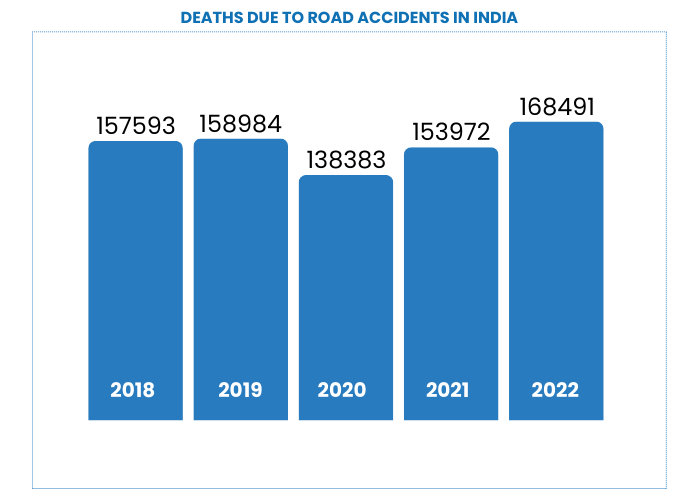
In the JSW’s letter, it was mentioned that every single car rated under India’s Bharat New Car Assessment Programme (Bharat NCAP) so far weighs more than 909 kg. A weight-based relaxation can unintentionally weaken safety outcomes.
Meanwhile, Maruti’s argument hinges on global practice. So it’s worth examining what Europe actually does. Since it’s often cited as the automobile benchmark.
How Europe Handles Emissions
The EU’s emission framework sets fleet-wide CO2 targets for cars. It starts at 93.6 g/km for 2025-2029, dropping to 49.5 g/km for 2030-2034. From 2035, the target is zero. This means a complete phase-out of tailpipe emissions. These are among the most ambitious standards anywhere in the world.
Like India, the EU uses a weight-based formula. Each manufacturer’s specific emission target adjusts based on the average mass of its registered vehicles — heavier fleets get higher allowable emissions. In principle, this sounds similar to India’s approach.
But there are crucial differences. The EU provides derogations, or exemptions for smaller manufacturers. Those responsible for fewer than 1,000 new cars per year are exempt from specific emission targets entirely. “Small-volume” manufacturers producing under 10,000 cars annually can propose their own derogation targets. “Niche” manufacturers with 10,000 to 300,000 registrations can apply for derogations until 2028.
Also, in May 2025, the EU adopted a targeted amendment allowing manufacturers to average their compliance over three years (2025-2027) rather than meeting annual targets. This was part of an industrial action plan announced in March 2025. It acknowledged that the automotive sector was experiencing rapid technological changes and increasing competition. According to research, averaging provision is expected to result in 26-51 megatons of additional lifetime CO2 emissions. That’s roughly equivalent to Denmark’s annual emissions. But it was deemed necessary to support industry investment in the clean transition.
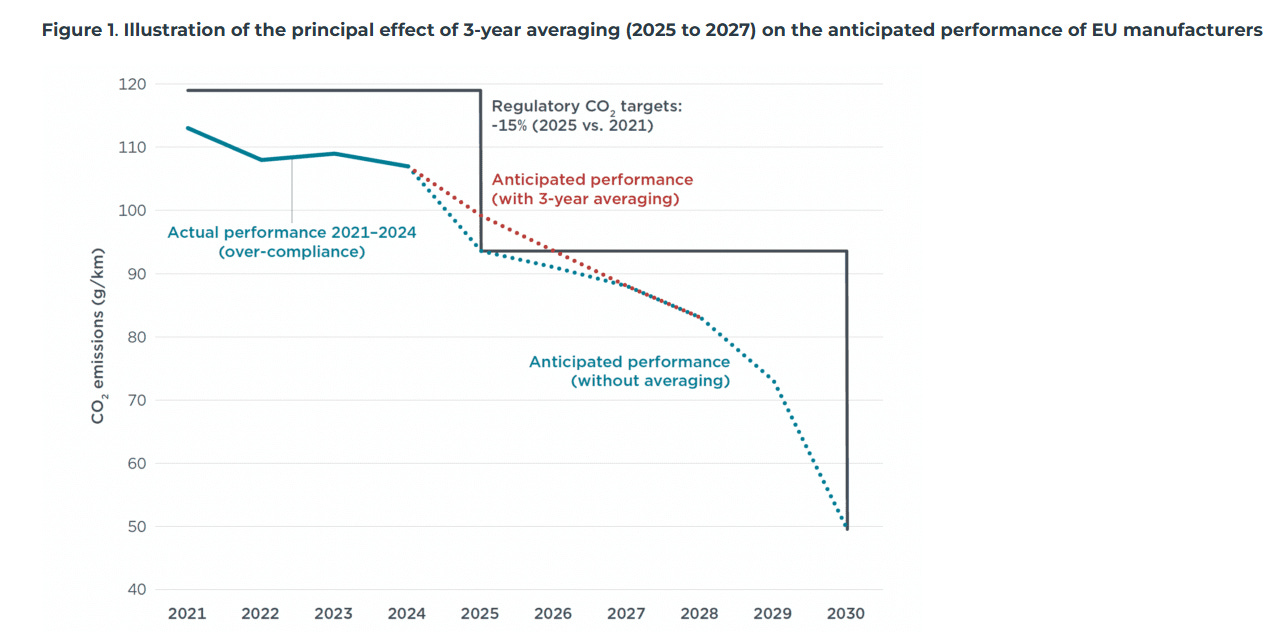
The point isn’t that Europe has gone soft on emissions. The 2035 zero-emission target remains intact. But the EU has repeatedly demonstrated willingness to adjust implementation timelines and provide relief mechanisms when industry stress becomes apparent. India’s proposed exemption, critics argue, is far narrower and benefits far fewer players.
What Happens Next
The BEE is currently reviewing inputs from all stakeholders. Final CAFE-3 norms are expected before April 2027.
Whatever the notification says, it won’t satisfy everyone. If small-car exemptions are included, larger manufacturers will see it as an unfair advantage handed to a single competitor. If they’re excluded, Maruti will argue that India is uniquely penalising affordable mobility.
The broader stakes are significant. If stricter norms without protection make small cars economically unviable, manufacturers may simply stop making them. Entry-level buyers would face higher prices. Two-wheeler owners looking to upgrade might find four-wheelers permanently out of reach.
Alternatively, if exemptions create loopholes that slow emission reductions or compromise safety standards, India’s broader goals around air quality and road safety could suffer. When the new CAFE 3 norms hit the Indian auto industry, it will herald a massive change.
Until then, ReadOn!
This requires leadership / statesmanship at the industry level and government. The questions asked should not be about small car v/s large car or one market segment v/s another. The questions need to be elevated to an higher altitude ; the government and the automotive companies must ask questions on the end objectives - larger purpose.
(a) How important is the motorisation of the country where a large section of the population doesn't have access to efficient modes of transport - they use cattle ferries, cycle rickshaws, mopeds, contraption vehicles etc. ; the car penetration is among world's lowest (30 per 1,000 as against countries having penetration as high as 500-600 cars per 1,000 people). It requires clarity of thinking about welfare.
(b) How important is access economy, the access of the poor to the mobility ladder? Not even good quality affordable used cars are available as much for first time buyers. only 1.5 used cars sold per new car sold (as against global averages of about 3.5 to 4.0) ; Talking about safety - the alternatives to cars are not safe at all for long distance commutes. It requires clarity of thinking about access economy, safety and transportation quality.
(c) Which metric is most important to move towards net neutrality? Is it emissions per tonne of metal or per capita or gross emissions for the entire country? Requires clarity of thinking in purpose.
(d) Are large cars really "sin" goods , should this mindset continue to penalise makers and consumers of high quality and technologically advanced machines? Isn't it polluting the clarity of purpose and clarity of thinking enough ?
I think the automotive industry regardless of brands need to rise above and do some real thinking in first principles and art a purposeful altitude; ditto for the government as well , to start thinking beyond the optics of monthly tax collection, companies need to get above petty squabbles of market share and transactional thinking and seriously attempt solving structural issues that come as blockers to Viksit Bharat & Amrit Kaal.
Solve the larger purpose - there will be benefits for all.