
The Future of Currency?
Were the "crypto bros" on to something? Are global governments catching up?
At ReadOn, we don’t just report the markets. We help you understand what truly drives them, so your next decision isn’t just informed, it’s intelligent.
On March 17, 2026, Mastercard announced it would acquire BVNK, a London-based stablecoin infrastructure company, for up to $1.8 billion.
To put that in perspective, that’s more than what most Indian unicorns are worth. That’s the sum being paid for a company most people have never heard of. A company that doesn’t make phones, doesn’t run a social network, and doesn’t sell shoes online. BVNK builds digital pipes that connect old money to new money. Specifically, it connects traditional banking systems to stablecoins.
And Mastercard, the second-largest card network in the world, just paid a king’s ransom for those pipes.
Why? Because stablecoins aren’t a sideshow anymore. Digital currency payment volumes hit at least $350 billion in 2025, and legacy finance is scrambling to keep up. The same week Mastercard dropped its bombshell, PayPal expanded its stablecoin-enabled payments across 70 countries. Wells Fargo filed to trademark its own stablecoin “WFUSD“. Visa has been running stablecoin pilots for cross-border settlements.
So why is Big Finance going unstable for stablecoins? Let’s find out.
What Exactly Are Stablecoins?
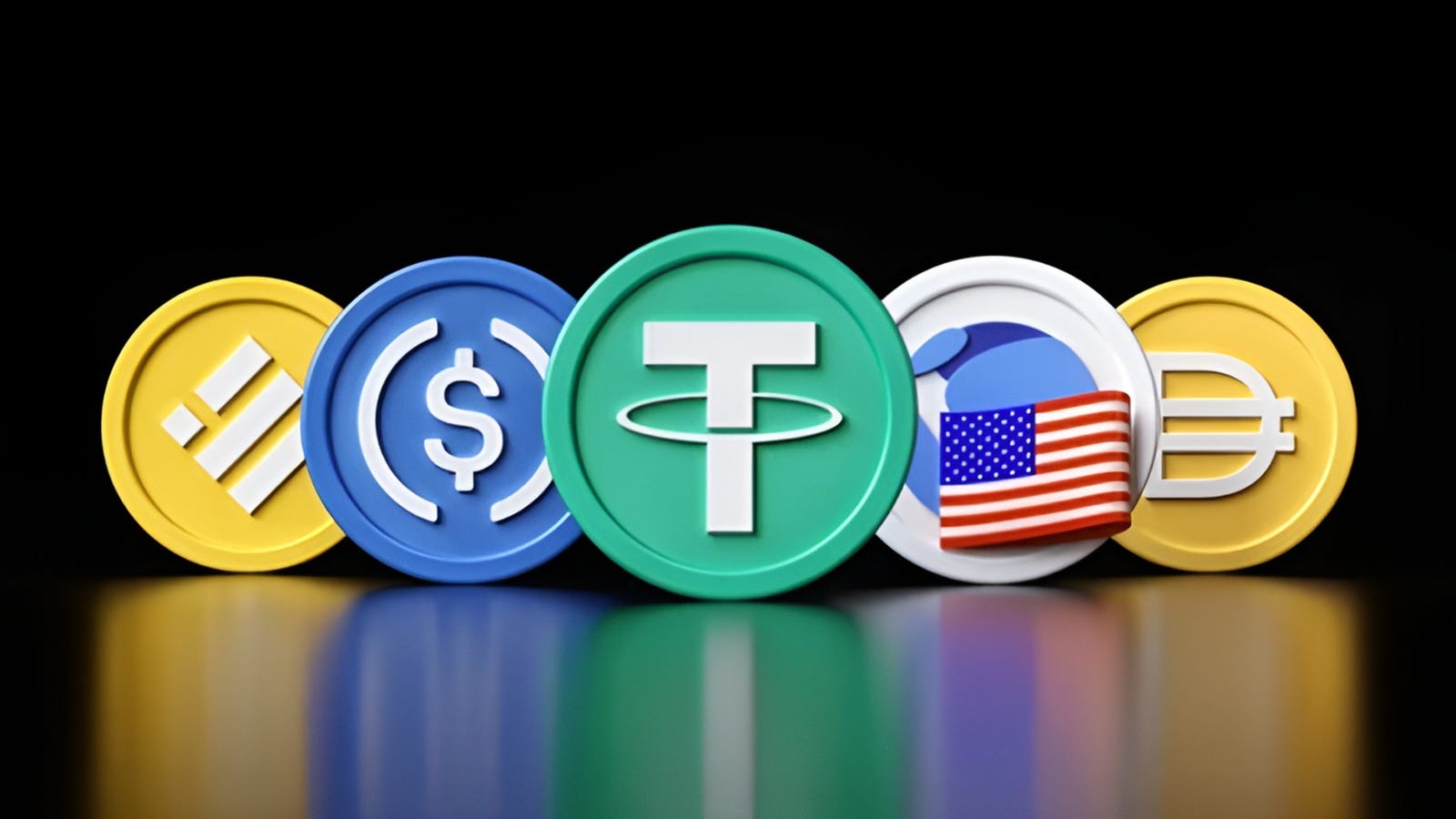
If you’ve heard the word “stablecoin” and thought it sounded like crypto jargon, you’re not wrong. Beyond the buzzwords though, it’s actually simple. Stablecoins are digital dollars (or euros, or yen) that live on the internet.
Take USDC. One USDC token equals one US dollar. Always. It’s backed 1:1 by actual dollars sitting in bank accounts and US Treasury bonds. You can send it to anyone, anywhere, anytime. No bank required. The transaction settles in minutes, not days. And it costs a few cents, not a few percent.
The stablecoin market size is around $300 billion in early 2026, up from $50 billion in 2020. USDT (Tether) alone commands ~$180 billion in market cap, accounting for 60% of the entire stablecoin market. USDC (Circle) sits at ~$75 billion. Together, these two assets control the overwhelming majority of the market. Roughly 99% of all stablecoins are pegged to the US dollar. Not the euro, not the yen, not the rupee. Just the dollar.
That concentration matters. We’ll get to why soon.
Why Is Big Finance Suddenly Interested?
For years, banks and card networks dismissed stablecoins as speculative toys for crypto traders. Then the numbers got too big to ignore.
In February 2026 alone, stablecoin transfers hit an all-time high of $1.8 trillion. USDC processed $1.26 trillion of that, while USDT handled $514 billion. This is actual value moving across borders, settling business deals, paying freelancers.
And it’s happening outside the traditional banking system.
That’s the threat, and the opportunity, that Mastercard saw when it bought BVNK.
PayPal’s PYUSD, Wells Fargo’s stablecoin, and Visa’s stablecoin settlement pilots all deliver one message: legacy finance isn’t fighting stablecoins. It’s integrating them.
Because card networks make money by sitting in the middle of transactions. Every time you swipe your card, Mastercard takes a cut. But stablecoins threaten that middleman business. If companies can move money directly on blockchain rails for pennies, why pay Mastercard 2-3%?
So Mastercard did what smart incumbents do. It bought the competition’s infrastructure before the competition could fully scale.
But there’s one more question now…
Who Even Uses Stablecoins?
This is where it gets interesting. Most people assume stablecoins are just for crypto speculation, buying Bitcoin, trading altcoins, gambling on meme tokens. And yes, a lot of stablecoin volume is trading activity. But increasingly, real businesses are using stablecoins for real payments.
McKinsey and Artemis Analytics analyzed actual stablecoin payment flows in 2025 and found that B2B payments accounted for $226 billion in volume, roughly 60% of global stablecoin payment activity, and up 733% year-on-year. Companies are using stablecoins to pay suppliers, settle invoices, and move money across borders.
Global payroll and remittances hit $90 billion in annualized stablecoin volumes. That’s still less than 1% of the global remittance market, but it’s growing fast. Why? Because traditional remittances are brutally expensive. The global average cost to send remittances is above 6%, and well above the G20’s target of 3% by 2030.
The IMF notes that some remittances cost up to 20% of the amount being sent. Stablecoins cut that to pennies. A fintech in the US can send USDC to a recipient in Argentina instantly. The recipient converts it to pesos locally. No correspondent banks. No three-day settlement. No hidden FX spreads.
Even stablecoin-linked card spending grew to $4.5 billion in 2025, up 673% from 2024.This is why Mastercard spent $1.8 billion. Stablecoins are becoming the backend infrastructure that makes cards work better.
The Geopolitical Angle
Now, for the complicated part. 99% of all stablecoins are US dollar-backed. USDT, USDC, PYUSD are all pegged to the dollar. This isn’t an accident. It’s the market voting with its money on which currency it trusts most.
But for emerging markets, this is a problem. When people in Argentina or Nigeria hold dollar stablecoins instead of their local currency, they’re effectively dollarizing their economy digitally. The IMF calls this “currency substitution,” and it decreases a central bank’s ability to control monetary policy.
The US just made it easier. The GENIUS Stablecoin Act legalized dollar-backed stablecoins, giving them regulatory clarity and legitimacy. For the US, this is soft power. Dollar stablecoins extend dollar dominance into the digital economy. Every USDC transaction reinforces the dollar’s dominance.
For countries like India, China, or Brazil, this is a strategic threat.
Where Does India Fit In?
India’s response has been typically Indian. Cautious, controlled, and quietly building its own alternative.
The Reserve Bank of India has been clear. In its latest Financial Stability Report, the RBI warned that stablecoins could disrupt monetary policy, fragment payment systems, and pose systemic financial risks. It argues central bank digital currencies (CBDCs) are “like stablecoins, but better.”
India’s digital rupee pilot has crossed 12 crore transactions, with over ₹28,000 crore in value exchanged. But adoption has been slow. The RBI wants banks to issue digital rupees under its supervision, keeping monetary control firmly in its hands.
Meanwhile, India is preparing a parallel track. In Q1 2026, India is expected to launch a rupee-backed stablecoin developed by Polygon and Indian fintech firm Anq called ARC (Asset Reserve Certificate). Each ARC token will be backed 1:1 by Indian government securities, Treasury bills, and fixed deposits.
ARC complements the Digital Rupee. The RBI’s CBDC handles final settlement. ARC operates as the programmable layer for payments, remittances, and business transactions. The initiative is designed to curb reliance on foreign stablecoins and keep liquidity onshore.
The Takeaway
When Mastercard pays $1.8 billion for stablecoin infrastructure, it’s not making a bet on crypto. It’s making a bet on the future of money movement. Stablecoins solve a real problem where moving value across borders is still painfully slow and expensive in 2026. They’re digital, borderless, and instant. And they’re growing too fast for banks to ignore.
But they’re also raising hard questions about monetary sovereignty. If 99% of stablecoins are dollar-backed, who really benefits from this revolution? The US, which cements dollar dominance. Emerging markets face a choice. Ban them and lose innovation, or build alternatives and compete.
India’s choosing the latter. ARC won’t replace USDC. But it doesn’t have to. It just needs to give Indians a rupee-denominated alternative that works as well. If it succeeds, India could become a model for other emerging markets trying to navigate the stablecoin era without surrendering monetary control.
The pipes are being rebuilt. The question is, who controls them?
Until that’s figured out, ReadOn!