
Robo Revolution
The factory of the future runs in the dark.
At ReadOn, we don’t just report the markets. We help you understand what truly drives them, so your next decision isn’t just informed, it’s intelligent.
There’s a factory in Changping, Beijing, that doesn’t need lights.
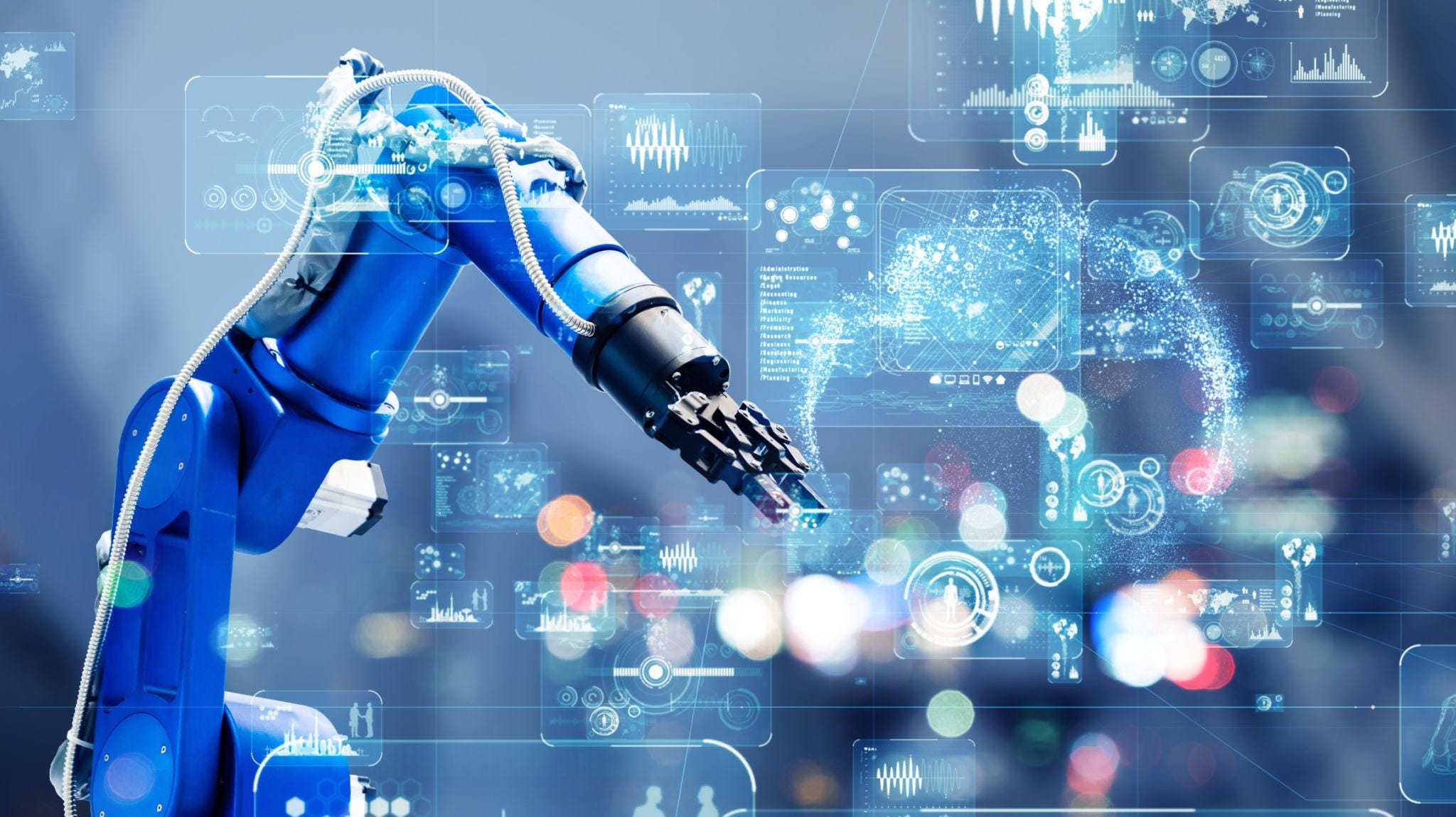
Xiaomi’s smart manufacturing facility spans 81,000 square metres, cost 2.4 billion yuan (~$330 million) to build, and runs 11 production lines, all without a single human worker on the floor. Robots pick, weld, inspect, and assemble around the clock. The facility can produce a smartphone roughly every second. You could call it a marvel of efficiency. The industry calls it a “dark factory” because you could run it with the lights off and no one would notice.
And Xiaomi is not stopping there. In March 2026, its EV factory trials showed two humanoid robots completing 90.2% of screw installation tasks autonomously over three consecutive hours, no human supervision required. CEO Lei Jun has promised “large-scale deployment” of humanoid robots across all Xiaomi factories within five years.
The AI Hype Cycle Finds Its Next Act
The plot is familiar. A technology bursts into the mainstream, valuations soar, and then the hard part of making it work in the real world begins. The human hand alone, with its ability to grip a Swiss watch and swing a hammer is, as roboticist Nicolaus Radford describes it, “hypercompetitive.”
Yet the capital is flowing as if the hard part is already solved. The global humanoid robot market was valued at $4.89 billion in 2025, on a trajectory to reach $165 billion by 2034 at a CAGR of over 50%. Morgan Stanley puts the 2050 market at $5 trillion. Since 2017, cumulative funding into humanoid robotics has reached $9.8 billion.
The pure-play bets are striking. Figure AI raised over $675 million in Series B funding backed by Microsoft, Nvidia, OpenAI, and Bezos in 2024, with its Figure 02 already works on BMW’s South Carolina assembly line. Tesla’s Optimus targets 100,000 units by end of 2026, though real production lags that ambition. China’s Unitree shocked the market in July 2025 by launching its R1 humanoid at just $5,900. That’s a price point most analysts thought was years away.
In India, the ecosystem is smaller but moving. Tracxn counts 272 robotics-industry application startups in India, with 90 funded. Genrobotics raised $20 million backed by Bharat Forge and Anand Mahindra. Gridbots secured $18 million from Tata Capital and Infosys. Ati Motors builds autonomous mobile robots for factory logistics. Niche plays, not moonshots, but the foundation is being poured.
The Auto Industry’s Unexpected Advantage
Interestingly, the companies best positioned to win this market may not be the startups grabbing headlines. They might be the people who spent the last 30 years making car parts.
That, at least, is the argument coming out of China’s Tier 1 supplier ecosystem, and it is a compelling one.
Tuopu Group, one of China’s largest auto components companies, spun off a robotic actuator unit in mid-2023 and started commercialising it last year. In 2025, its robotic actuator business generated ¥13.59 million in revenue. That looks modest in isolation, but the gross margin hit 28.25%, compared to just 18.04% for its conventional auto parts business. Robots are not just the next growth curve for Tuopu. They are structurally more profitable than the core business.
The underlying logic is architectural. As Gasgoo CEO Tina Zhou explains, smart cars and humanoid robots share the same technical skeleton: perception (cameras, lidar), decision-making (compute + algorithms), and execution (motors, actuators, controllers). Tuopu’s robotic actuators evolved directly from its Intelligent Braking System. Fanzhou Precision notes that 70% of its automotive reducer processes are identical to robotic harmonic reducers. The crossover is not metaphorical. It is literally the same machinery, repurposed.
This explains why China’s MIIT recorded over 300 humanoid robot models launched in 2025 alone. That’s more than half the global total, with legacy manufacturers, not startups, driving much of that output.
And auto Tier 1s have something pure-play startups don’t: their own factories as testing grounds. As Tina Zhou puts it, auto plants are “potentially the best scenarios for early large-scale deployment.” The Tier 1 is simultaneously the robot supplier and the robot customer.
The global auto ancillary industry is taking this logic seriously. In January 2026, Robert Bosch announced a strategic technology partnership with NEURA Robotics, Europe’s leading humanoid startup, to jointly collect real-world movement and production data across Bosch’s manufacturing facilities and co-develop AI software for humanoid deployment. This is not a passive investment. Bosch is opening its own factory floors as training grounds for robots it may one day sell. Meanwhile, Schaeffler, the German motion technology giant with a listed Indian subsidiary, went a step further, making a minority investment in Agility Robotics and committing to deploy Agility’s Digit humanoid robots across its global network of over 100 plants by 2030. At Hannover Messe 2025, Schaeffler showcased humanoid robotics capabilities alongside Accenture, NVIDIA, and Microsoft. Its internal presentation frames robotics as its “5th Division”. It’s a deliberate hedge against its core automotive business.
India’s auto players are beginning to walk this same road, but carefully. Tata Group’s TAL Manufacturing Solutions launched India’s first domestically produced industrial robot, the TAL Brabo, back in 2016, and has since deployed welding and assembly robots across Tata Motors, Bosch, and Mahindra facilities. Mahindra runs robotic weld lines at its Nashik factory, with robots handling roughly 70% of body shop work, and has applied generative AI for robot maintenance on its shop floors. Tata Elxsi is building digital design capabilities for robotic arms and autonomous vehicles.
Among Indian auto ancillaries, Schaeffler India has also acquired Dhruva Automation & Controls, an Indian engineering services firm specialising in smart automation, directly bolstering its domestic automation capabilities. And then there is Sedemac Mechatronics, the IIT Bombay spin-off that listed on NSE and BSE in March 2026 at a ₹1,087 crore IPO. Sedemac doesn’t build robots, but it makes the ECUs, or the tiny electronic “brains”, that sit inside millions of two-wheelers, three-wheelers, and generators. It holds roughly 35% domestic market share in ISG ECUs for two- and three-wheelers. The intelligence layer of vehicles is exactly the competency that transfers most cleanly to robotics.
But India’s auto industry remains significantly under-automated compared to peers. Low labour costs have historically made the ROI case for automation difficult. That calculus is shifting as Indian OEMs target export markets, where global buyers demand the uniformity only robotic lines can consistently deliver.
The Takeaway
Not all of this is going according to the brochure. Only 16,000 humanoid robots were installed globally in 2025, against a backdrop of production announcements in the hundreds of thousands. A robot that dances on a stage can still fumble an ordinary household object.
China’s Tier 1 suppliers face a structural vulnerability: they own the hardware layer but the critical bottleneck is shifting to software. AI algorithms, perception-decision loops, data training. Making an actuator move is engineering. Making it think is something else entirely.
The dark factory is real. The economics are increasingly compelling. But the gap between Xiaomi’s Changping showpiece and a globally scalable robotics industry is still measured in years, not quarters. That gap is precisely where the opportunity, and the risk lives.
Until next time, ReadOn!