
Google Wants to Debug Florida
Move aside Hit! There's a new mosquito killer in town!
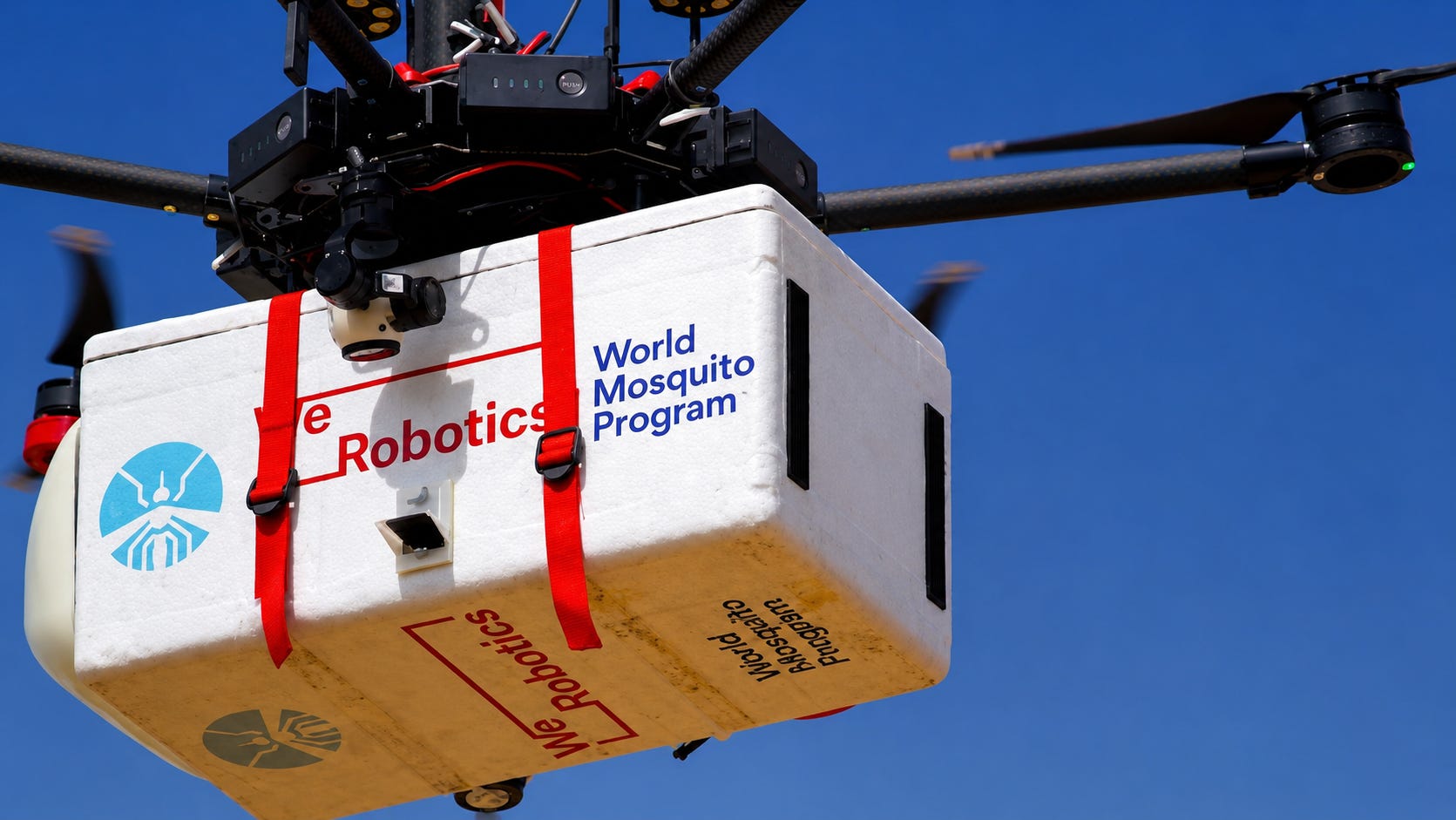
At ReadOn, we don’t just report the markets. We help you understand what truly drives them, so your next decision isn’t just informed, it’s intelligent.
Imagine opening a government notice that reads, “We plan to release 32 million infected mosquitoes into your neighborhood.” The rational response, the human response, would be to panic, call someone, hang up, panic again.
That’s essentially the headline coming out of Florida right now. Google’s life sciences subsidiary, Verily, has formally asked the U.S. Environmental Protection Agency (EPA) for an Experimental Use Permit to release up to 32 million specially treated male mosquitoes across California and Florida over two years. Under the proposed plan, up to 16 million mosquitoes would land in Florida in Year 1, and another 16 million in California in Year 2. The EPA opened public comments through June 5, 2026, with a final decision to follow.
The idea, as strange, counterintuitive, or maybe even as alarming as it sounds, is to fight mosquitoes with mosquitoes.
What’s Going On?
Mosquitoes are the deadliest animals in human history. One species alone (the Aedes aegypti) is responsible for an outsized share of that carnage, transmitting dengue, Zika, chikungunya, and yellow fever to hundreds of millions of people each year. In the US, Debug is also targeting Culex quinquefasciatus, the vector behind West Nile virus and St. Louis encephalitis, both increasingly active across American states. Globally, mosquito-borne diseases cost an estimated $12 billion per year. Climate change is widening the geographic range of Aedes aegypti into new latitudes and altitudes. The problem is not static.
The Debug approach is extremely simple in theory. Since 2016, Google scientists and engineers have been working on one core idea: release male mosquitoes infected with a naturally occurring bacterium called Wolbachia. Male mosquitoes can’t bite. Their anatomy simply doesn’t allow it. When they mate with wild females, Wolbachia prevents the eggs from hatching. Release enough “good bugs,” maintain the program over months, and the wild population collapses, without a drop of insecticide.
Behind the biology is a formidable industrial operation. Debug combines software engineers, robotics specialists, AI systems, and mosquito biologists who have built automated mosquito factories capable of producing millions of insects weekly. Computer vision sorts males from females with precision; robots manage breeding, incubation, and field deployment. The EPA is reviewing Verily’s application under the Federal Insecticide, Fungicide and Rodenticide Act, treating it with the same seriousness one would apply to a new class of pesticide. Which, biologically, it is.
What Exactly Is Project Debug?
The Sterile Insect Technique has been around since the 1950s and is already used successfully against screwworms, fruit flies, and codling moths. Debug’s contribution is industrializing it for mosquitoes, at a speed and scale no one has attempted before.
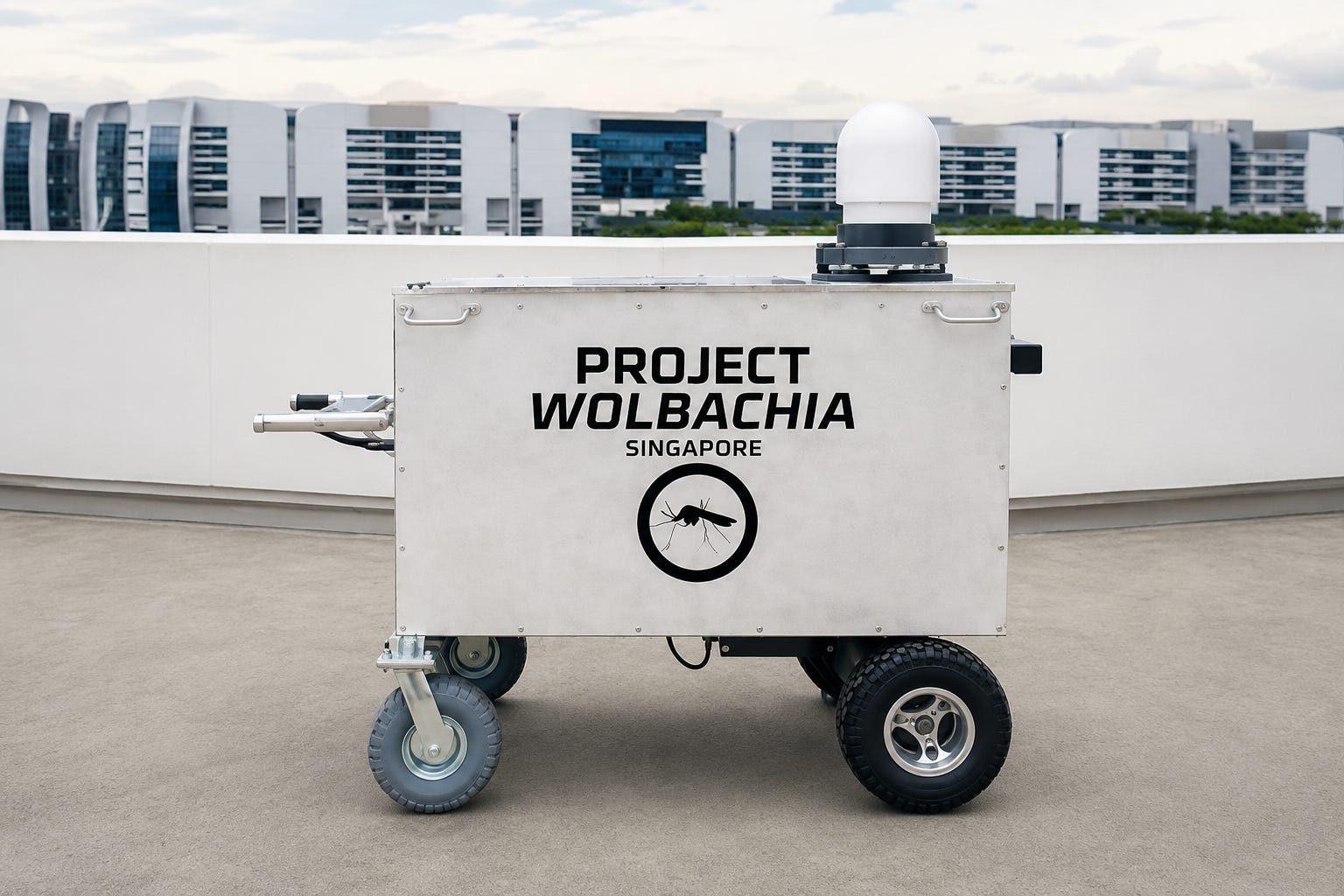
In 2017, Verily trialed the release of 20 million mosquitoes in Fresno County, California to build the scientific case for broader rollout. A year later, it partnered with Singapore’s National Environment Agency on what became ‘Project Wolbachia.’ The results have since become the program’s most compelling advertisement. Today, more than 10 million male Wolbachia mosquitoes are released weekly in Singapore alone. Rigorous NEA trials documented 80-90% suppression of the Aedes aegypti population and more than 70% reduction in dengue cases within six to twelve months of release.
Debug has since made its technology available in the British Virgin Islands, received a permit to release mosquitoes in Hawaii in April 2026, and has now released over one billion mosquitoes across four continents. The EPA notes Google’s US proposal could be of “regional and national significance.” Debug Project lead Linus Upson told the Financial Times: “We could make Singapore the first dengue-free country in the tropics.” Florida is next. But there is a far larger problem waiting much further east.
What About India?
Asia accounts for 70% of the global dengue burden. India, with its tropical climate, dense cities, sprawling periurban settlements, and chronically underfunded vector control programmes, sits right at the centre of it.
On paper, India’s fight against malaria looks like a genuine public health victory. Cases and deaths have fallen 80% since 2015, India exited the WHO’s ‘high burden to high impact’ group in 2024, and confirmed cases dropped from 1.08 million in 2016 to 255,500 in 2024. That’s a 76% decline. The government has a stated target of malaria elimination by 2030.
But the fine print complicates that story. The World Malaria Report 2025 estimates 2 million malaria cases in India in 2023, against an official count of just 220,000. That is a nine-fold gap. Underreporting in India’s public health data is not a footnote, it is structural. (Remember the COVID-19 casualties?) States like Odisha, Jharkhand, Chhattisgarh, and West Bengal bear a disproportionate share of India’s malaria burden, often with the least surveillance capacity to capture it accurately. Meanwhile, globally, malaria is rising again: 282 million cases and 610,000 deaths in 2024, driven by drug-resistant parasites and insecticide-resistant mosquitoes.
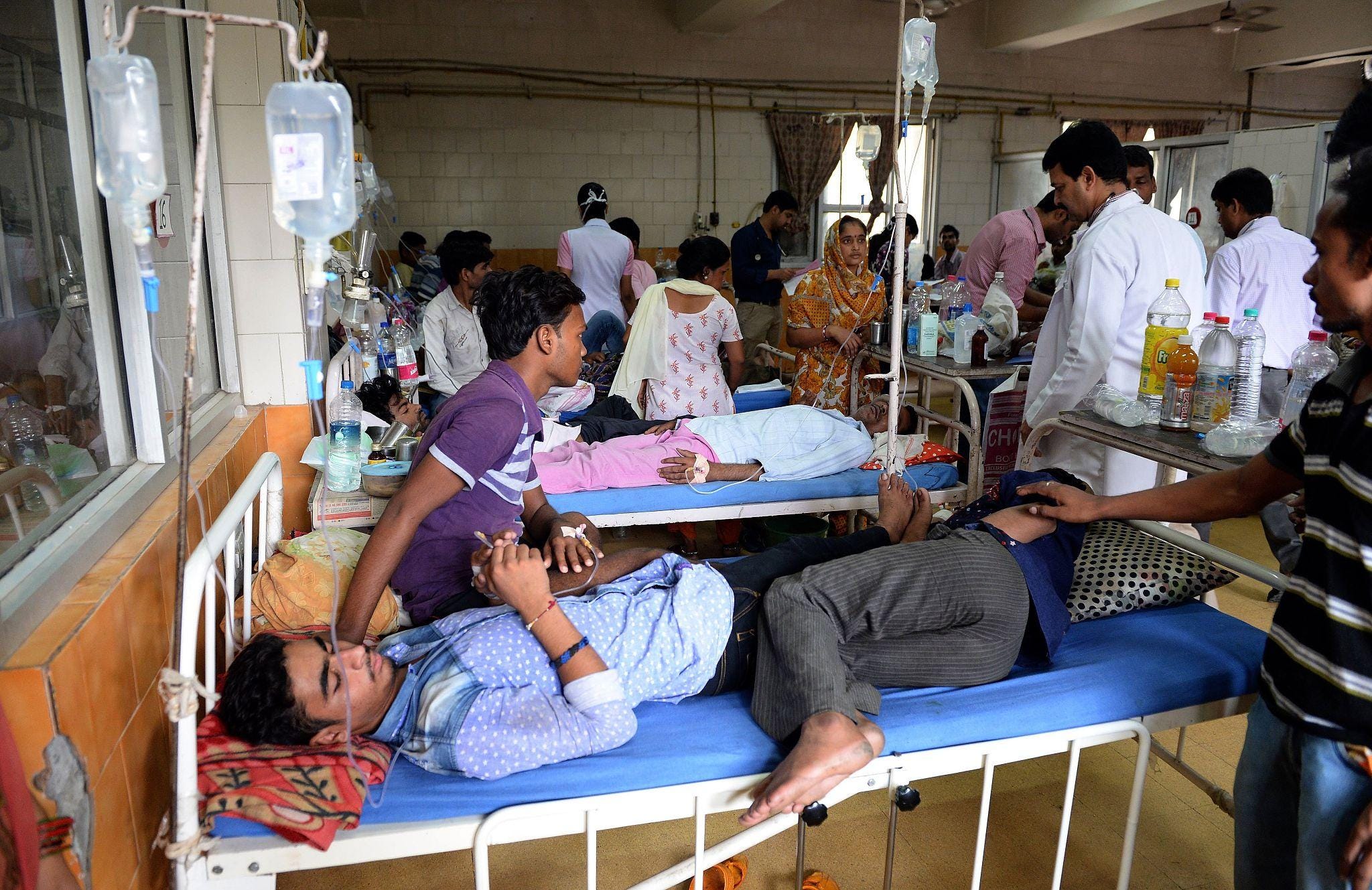
Dengue is India’s more immediate and visible crisis. India officially recorded 233,519 dengue cases and 297 deaths in 2024, per NCVBDC data. Those official tallies, as always, are a fraction of reality. A systematic analysis put India’s true annual dengue caseload at 5.78 million. That’s 282 times the officially reported number. Researchers modeling dengue trends have projected over 300,000 officially reported cases and 533 deaths for India in 2026 alone, and that number represents only what survives through surveillance.
The economic damage is not abstract. A 2023-24 city-wide dengue cohort study in South India found hospitalized patients paid a median INR ₹16,827 in direct medical costs per episode, before lost wages or caregiver days enter the picture. Extrapolated across tens of millions of actual annual cases, the national dengue bill runs into several billion dollars. Malaria’s toll is similarly punishing. Each episode costs Indian households 2-4 days of lost productivity, with out-of-pocket treatment averaging $2.67 per infection, for working adults in Odisha or Jharkhand, that’s not a statistic, it’s a debt cycle. A 2024 global analysis in Science of the Total Environment put the average annual economic cost of Aedes mosquito-borne diseases at $3.1 billion worldwide, and explicitly flags that as a significant undercount, since most lost earnings in low-income countries go unrecorded.
This is a recurring productivity tax, levied disproportionately on those least able to absorb it.
The Takeaway
Debug’s expanded Singapore facility is explicitly designed to develop programs for countries in Southeast Asia with larger populations, building customized, cost-per-person protected targets for regional deployment and actively working to make the technology more affordable at scale. The science is sound. The precedent is encouraging. The demand, as India’s numbers make brutally clear, is immense.
What is missing is a regulatory pathway built for this kind of intervention. India’s framework for novel pest control is not designed for programs at this scale, and the political sensitivity around any biotech intervention, particularly one backed by a US tech company, would be considerable. What India would also need is a clear champion inside the government: a ministry or department willing to run a pilot in a high-burden district, gather data, and push through the regulatory thicket.
And unlike Florida and California’s 32 million mosquitoes over two years, India would need billions released continuously, across thousands of cities and rural clusters, in an ecosystem nothing like Singapore’s controlled island environment.
But the alternative is familiar. Spray insecticides on mosquitoes growing steadily more resistant to them, continue tallying hospital days and lost wages, and rely on a surveillance system that undercounts by a factor of nine.
The mosquito has outlasted every weapon humanity has thrown at it for millennia. Google wants to try bacteria, AI, and a billion bugs. For a country like India, the cost of sitting on the sidelines, waiting for someone else to work out the playbook, may be far higher than it looks.
Until next time, ReadOn!