
Europe Bans, India Builds
One country's ban is another country's capex.
At ReadOn, we don’t just report the markets. We help you understand what truly drives them, so your next decision isn’t just informed, it’s intelligent.
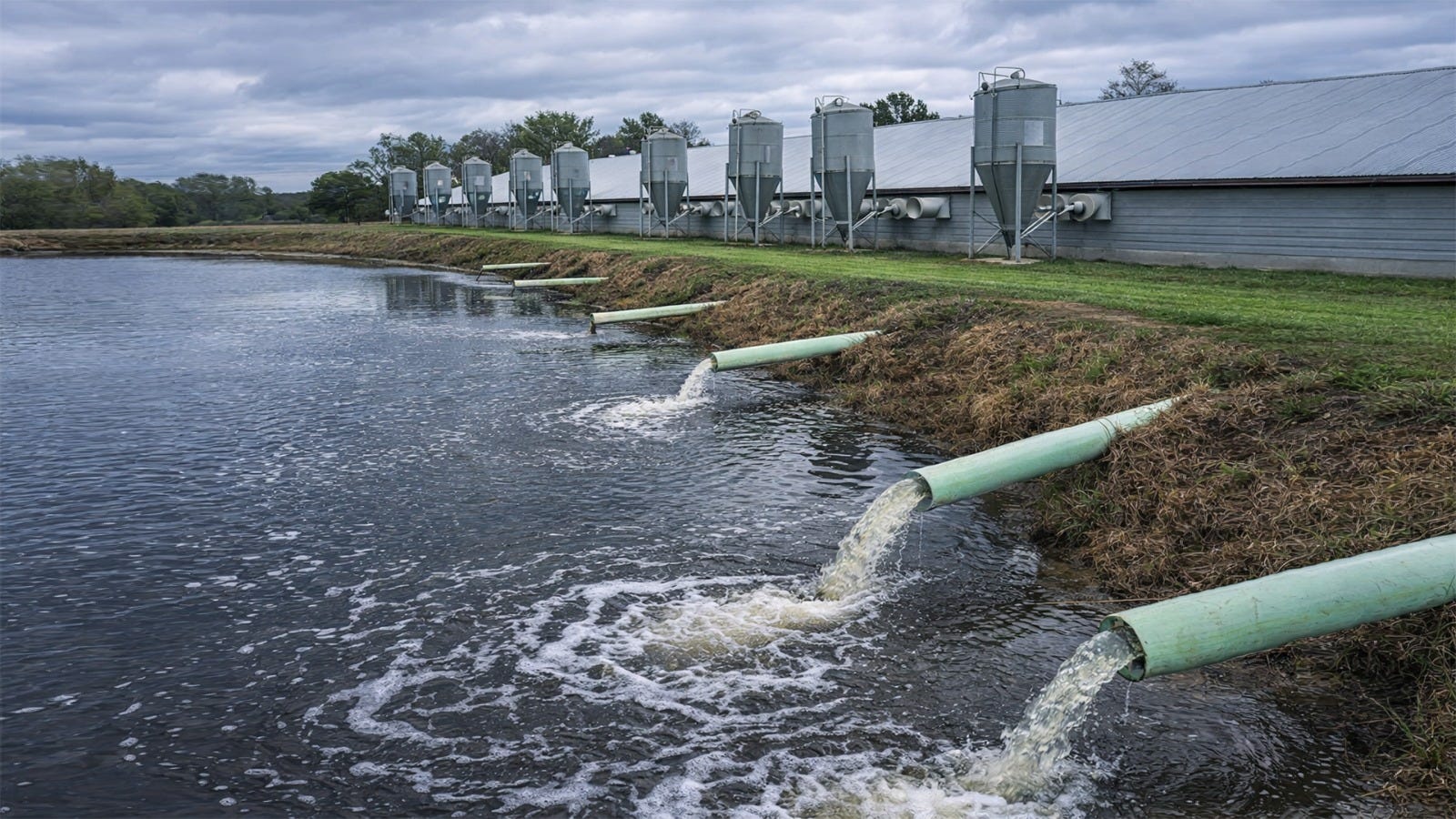
The Miteni factory in Vicenza had contaminated groundwater across 100 square kilometers, poisoning the drinking water of 350,000 people. In June 2025, eleven of its former executives were sentenced to a combined 141 years in prison for deliberately poisoning water resources and causing environmental catastrophe.
Yet the plant itself found a second life. In 2019, Indian chemical manufacturer Laxmi Organic Industries acquired Miteni’s assets through its subsidiary Viva Lifesciences for ₹76.33 crore.
By 2023, cargo ships were ferrying the dismantled equipment from Italy to Mumbai.
By 2025, the same chemicals that devastated Veneto were being produced again. This time in Maharashtra.
So, what exactly was the Miteni plant producing that led to its shutdown and how did it find its way in India?
Let’s find out.
The Italian Nightmare
The scale of Miteni’s contamination emerged slowly, then all at once. In 2013, Italian environmental authorities identified the Trissino plant as the source of PFAS. Blood tests of residents revealed PFOA levels far exceeding safety thresholds set by Italy’s National Health Institute.
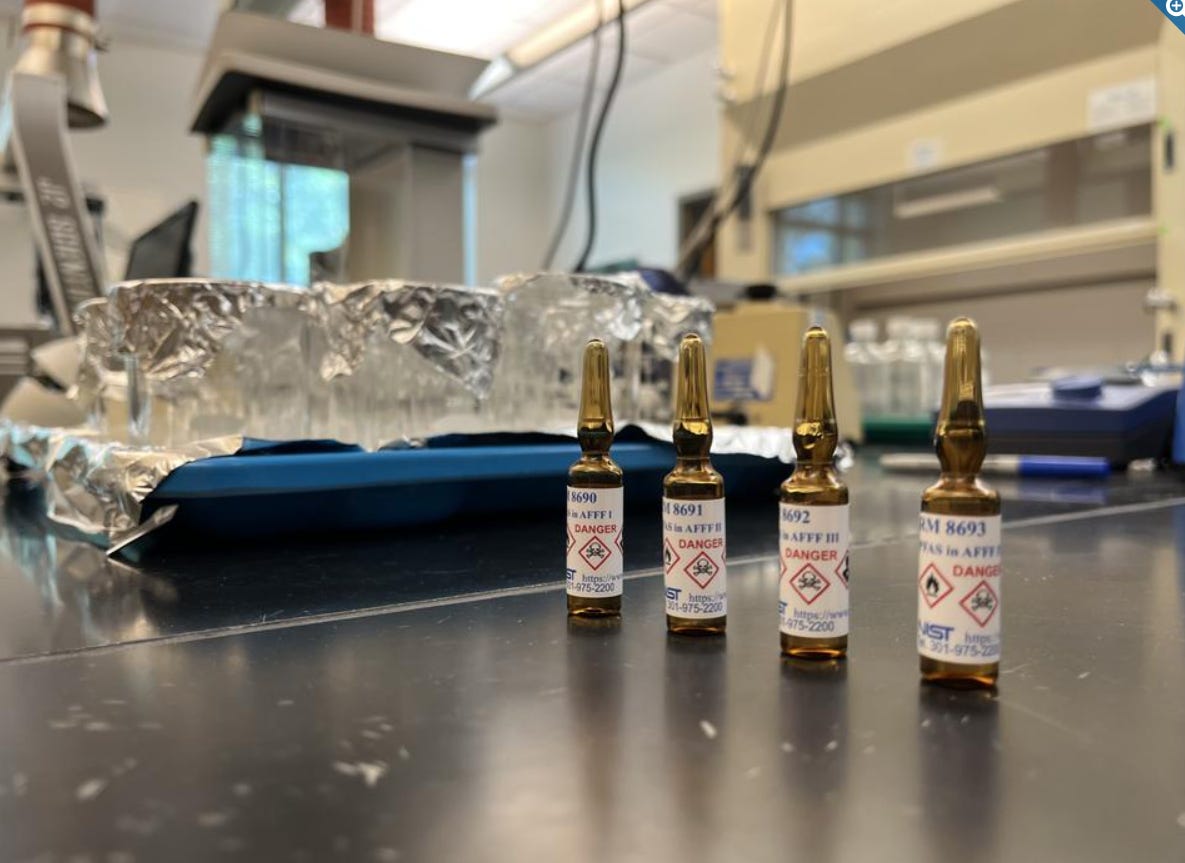
PFAS or Per- and Polyfluoroalkyl Substances were first commercially used by DuPont in the 1940s. They belong to a family of over 10,000 synthetic chemicals characterized by an extraordinarily strong carbon-fluorine bond.
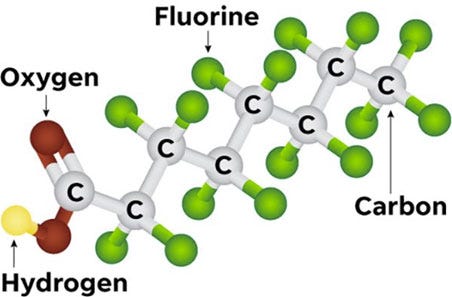
This bond makes them resistant to heat, water, and oil. These properties make them invaluable in manufacturing everything from non-stick cookware to firefighting foam, food packaging to textiles.
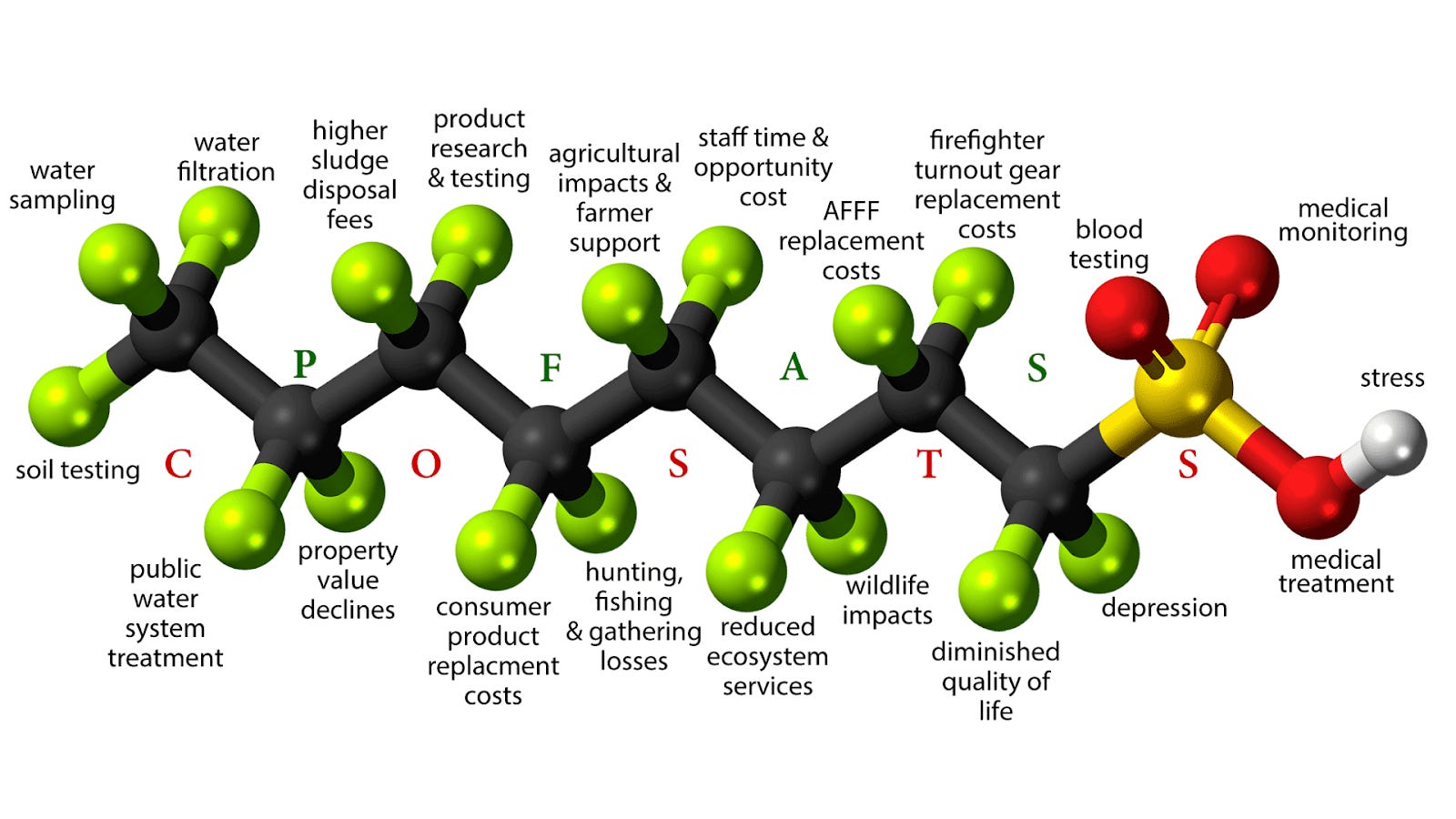
But that same indestructibility becomes their curse. PFAS don’t break down. They accumulate in soil, water, and living tissue. Once in the human body, they stay. PFOA, one of the most studied PFAS, has a half-life of 3 to 5 years in human blood. So, every 3 to 5 years, the effects of these chemicals is only reduced to half. It never leaves the body.
Long-chain PFAS like PFOS and PFOA were globally banned in 2009 and 2019.
In response, manufacturers shifted to short-chain and ultra-short-chain alternatives. But research increasingly suggests these replacements may be equally harmful, and just less studied. In November 2023, the International Agency for Research on Cancer confirmed PFOA as carcinogenic to humans and classified another PFAS as possibly carcinogenic.
The contamination spanned three provinces: Vicenza, Verona, and Padua. Over 350,000 people had been drinking contaminated water for years, possibly decades. Studies found elevated PFAS levels in an area three times the size of the contaminated zone in Parkersburg, West Virginia, affecting three times as many people. Parkersburg was the subject of the film “Dark Waters”.
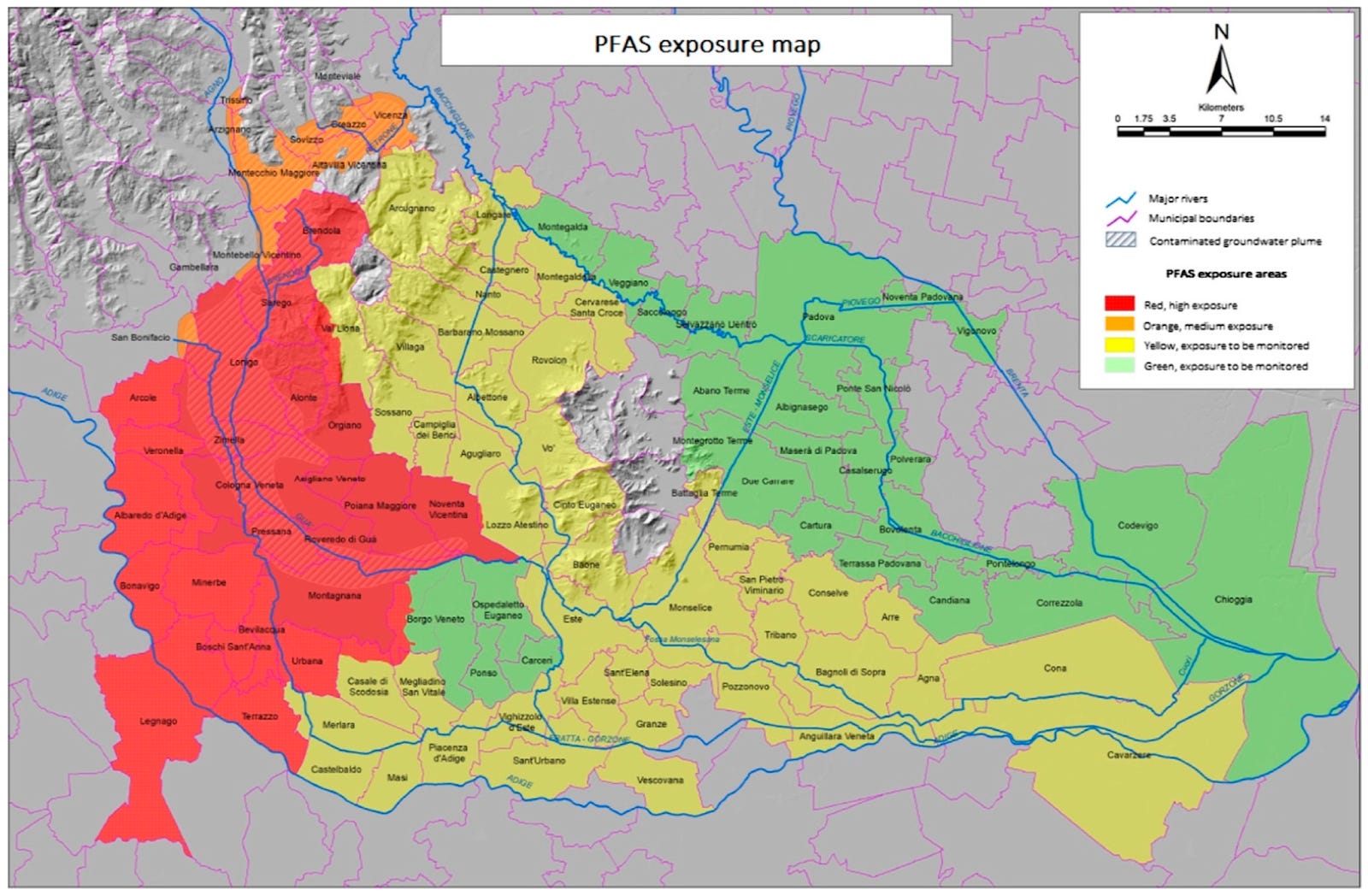
A 2024 study estimated 4,000 excess deaths in the contaminated region from causes including kidney cancer, testicular cancer, and cardiovascular disease. In May 2025, for the first time in Italy, a court recognized a causal link between PFAS exposure and the death of a Miteni worker who died of a pelvic renal tumor in 2014. He had worked at the plant between 1979 and 1992.
Evidence presented at trial showed that Miteni’s managers had known about PFAS contamination since the 1990s but continued operations without adequate environmental protections. The company failed to properly treat wastewater and attempted to conceal the problem after its discovery. In 2011, scientists found extraordinarily high concentrations of PFAS in the plant’s wastewater. The company declared bankruptcy in 2018.
The June 2025 verdict was harsher than prosecutors requested. They had sought 121 years; judges imposed 141. The court ordered compensation for 300 civil parties, including the grassroots group Mamme No PFAS, or mothers who discovered their children had dangerously high PFAS levels in their blood. The ruling marked the first time anywhere that corporate executives faced criminal jail time for PFAS contamination.
The Acquisition Pitch
In June 2019, an Indian chemical company Laxmi Organic Industries acquired its plant, machinery, technical documentation, REACH registrations and associated patents, marking its strategic entry into the fluorochemicals sector.
When Laxmi Organic Industries went public in March 2021, the Miteni acquisition featured prominently in its investment narrative. The company positioned it as a strategic entry into high-margin specialty fluorochemicals. Investor presentations mentioned the acquisition of “plant & machinery, design and operating paperwork, REACH registrations and patents” from “Miteni, a manufacturer of organic fluorospecialties and electrochemical fluorination.”
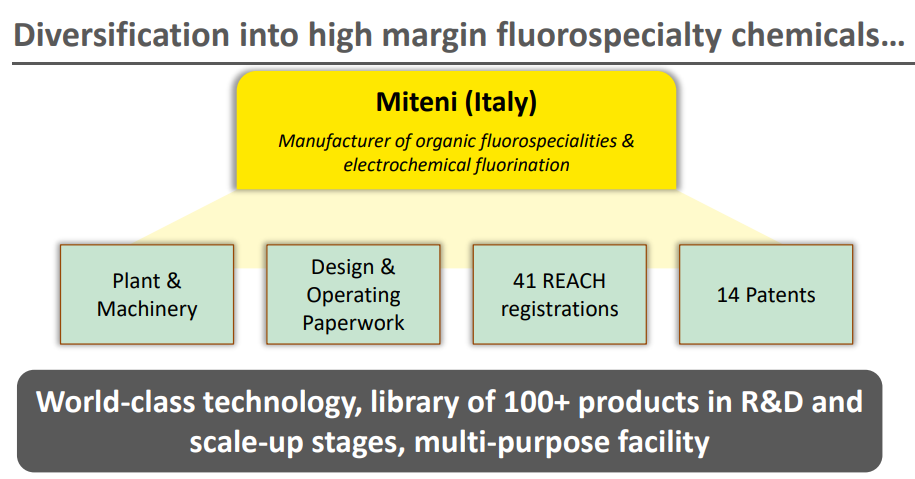
The pitch was compelling. Fluorochemicals represented a differentiated business. One in every three new pharmaceutical active ingredients would be based on fluorine chemistry. Up to 20% of pharma molecules contain fluorine atoms. 50% of recently developed agrochemical molecules have fluorine. The company had acquired world-class technology, a library of 100+ products in R&D, and a multi-purpose facility, all for entry into a space with “limited competition.”
The ₹600 crore IPO prospectus mentioned that Laxmi was “well placed to enter into the high margin specialty fluorochemicals space through this acquisition.” The Lote Parshuram facility would start producing fluorospecialty chemicals by the fourth quarter of fiscal 2022. According to a Frost & Sullivan report cited in IPO documents, Lakshmi’s expertise in acetyl and specialty intermediates combined with entry into fluorochemicals would put it “at a differentiated position from other chemicals manufacturers.”
Nowhere in these documents was there mention of the environmental catastrophe that had forced Miteni’s closure. When questioned by investors, Lakshmi’s chairman Harshvardhan Goenka stated that Miteni had been “doing everything legally according to European standards.” The company’s focus remained on margins, market opportunities, and technical capabilities.
By early 2025, the Lote Parshuram plant was fully operational. Environmental permits and internal documents obtained through investigative journalism show authorization to produce up to 1,320 metric tons per month of fluorinated products. These were consistent with Miteni’s historical production capacity.
A comparison of product lists reconstructed through environmental permits and other documents shows a match between 21 fluorinated chemicals produced at Lote and Miteni’s historical production. The plant supplies specialized intermediates to pharmaceutical and agrochemical manufacturers globally, including to some of Miteni’s old clients.
The facility operates four production blocks, Plant-100, Plant-200, Plant-300, and a Pilot Plant & Kilo Lab, alongside utilities, an effluent treatment plant, warehouses, storage tanks, and an administration block. The Miteni plant had operated for more than 20 years. After importing equipment from Italy, Lakshmi refurbished piping and instruments but kept the original design and fittings largely unchanged.
A crucial detail emerged from investigative reporting. Detailed project plans for Lakshmi’s Lote factory and its full list of fluorinated products had been prepared many months before Miteni declared bankruptcy and its assets went to auction in 2019. Lakshmi was the only bidder. Legal experts involved in the Italian proceedings suggest this timeline raises questions about undisclosed prior connections between the companies. That’s potentially grounds for a new strand of legal action against Miteni’s former executives.
The Bottom Line
Miteni’s toxic legacy lives on in two places now. In the contaminated groundwater of Veneto, where cleanup costs are estimated in the hundreds of millions of euros, and in Lote Parshuram, where production has resumed without the regulatory infrastructure to monitor environmental or health impacts.
The mothers of Mamme No PFAS continue fighting for cleanup of the Trissino site, which still leaches PFAS into the environment. They demand regular testing of locally grown food and livestock. Regional authorities have been reluctant, reportedly fearing damage to the agricultural industry and exports.
In India, no such activist movement exists yet. PFAS isn’t on the political agenda. Media coverage is minimal. A 2019 report by the International Pollutants Elimination Network found only two mentions of PFAS in the Indian press. Public awareness remains low. The gap between scientific understanding and regulatory action is measured in decades.
A 2024 research paper in Environmental Health noted that India’s regulatory framework “remains in its early stages” compared to international standards. The authors found PFAS contamination in water bodies, soil, sediment, atmosphere, and wildlife. They identified industrial corridors as primary contamination hubs and documented multiple exposure pathways including contaminated drinking water, food, and dust inhalation.
Six years after Lakshmi acquired Miteni’s assets, in October 2025, India’s Food Safety and Standards Authority finally banned PFAS in food contact materials. It’s a start, but it doesn’t address industrial production, wastewater discharge, or environmental monitoring.
The Miteni case poses uncomfortable questions. Why does India accept industrial processes deemed too dangerous for Europe? Why do companies producing chemicals banned at home face minimal scrutiny when relocating production abroad? Why is the burden of proof on affected communities rather than on manufacturers of persistent toxic substances? When these questions will be answered, and when these problems will be solved, is something no one can guess.
Until then, ReadOn!
This is the case of opting for own benefits, therefore everyone involved in the process from inception to final production has not commented or tried to stop. People have forgotten the Union Carbide Bhopal gas tragedy of 3rd December 1984.