
Does Paris Hate Cars?
Maybe Paris' mayor saw how bad traffic jams can be in Bangalore?
At ReadOn, we don’t just report the markets. We help you understand what truly drives them, so your next decision isn’t just informed, it’s intelligent.
France’s motor vehicle manufacturing industry is worth €135.3 billion, or roughly ₹12 lakh crore. It’s Europe’s third-largest vehicle producer after Germany and Spain. Renault, Peugeot, and Citroën are pillars of the French economy, employing hundreds of thousands of people and churning out millions of cars annually.
And now, that industry has a problem. Paris doesn’t want its cars anymore. Actually, the city doesn’t want cars at all, it seems.
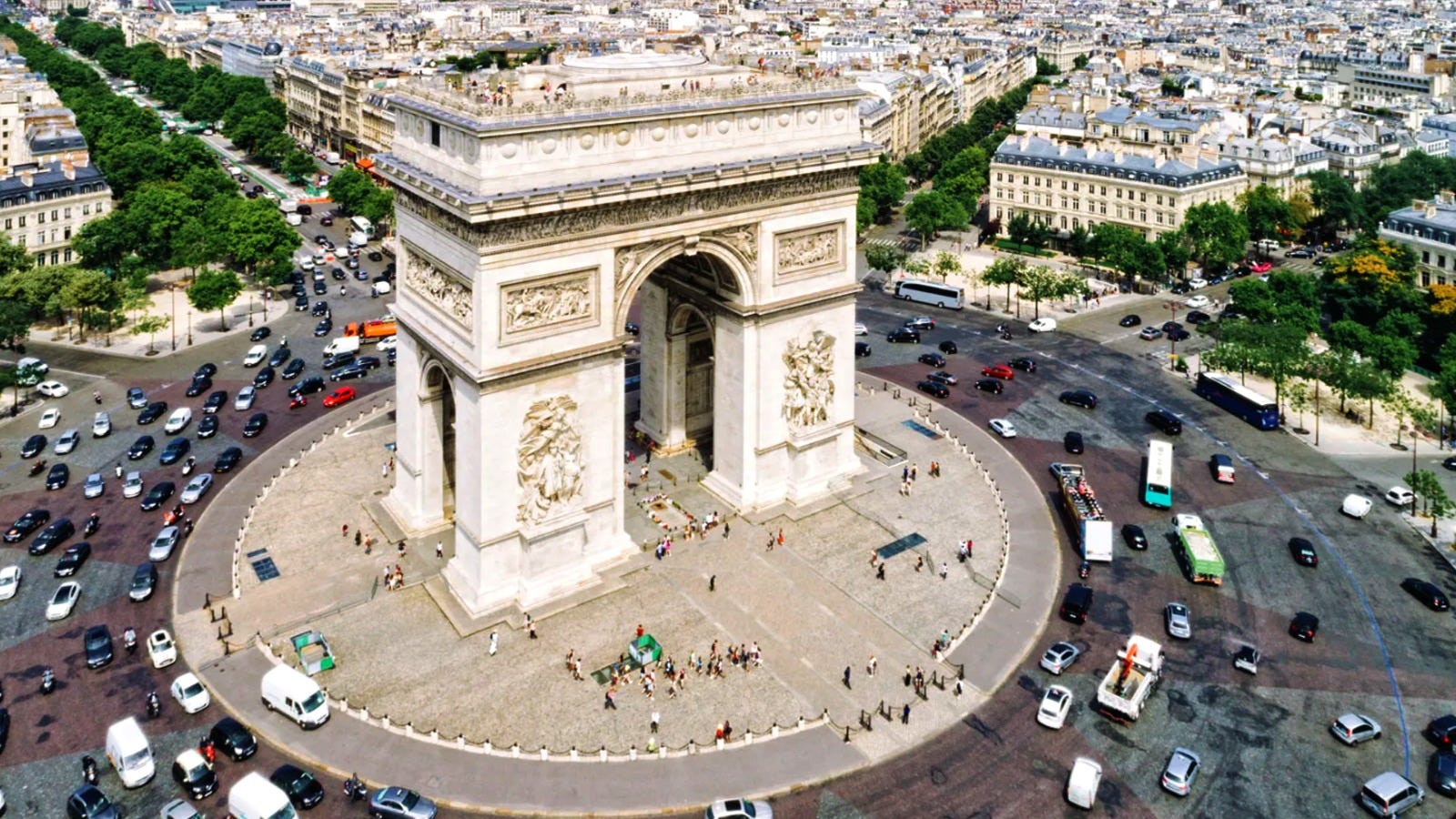
For 12 years, Anne Hidalgo, Paris’ outgoing mayor, waged war on the automobile. She pedestrianized streets, ripped out parking spaces, and built 1,400 kilometers of bike lanes. She banned cars from entire neighborhoods. She turned the once major motorway of Seine riverbanks into pedestrian walkways. She even lowered the speed limit across Paris to 30 km/h.
The results? Dramatic. More journeys are now made by bike than by car in Paris. Close to a third of Parisians have started cycling more, with 9% now commuting on two wheels. In 2025, Paris was crowned Europe’s best cycling city. Air quality improved. Paris now ranks better than London and Madrid.
But there’s a cost. And it’s not just measured in parking meters torn out or bike lanes painted. It’s a fundamental reimagining of what a city is for, and who gets to use its streets.
What’s Going On in Paris?
Hidalgo didn’t just trim around the edges. She launched a full-scale urban revolution.
In March 2025, Parisians voted in a referendum to close 500 more streets to cars, removing 10% of the city’s parking spots. That’s on top of the 300 streets already pedestrianized since 2020. The historic heart of Paris, including areas around Notre Dame, became a limited traffic zone, where private cars can only begin or end journeys, not pass through.
Major streets like Rue de Rivoli have been largely cleared of cars. Place de la Bastille, once a traffic hellscape, now has 50 more trees and 7,000 square meters of additional pedestrian space. The Voie Georges Pompidou, formerly one of central Paris’ main motor vehicle routes is now a peaceful pedestrian quayside.
The goal was to make Paris “100% bikeable by 2026”.
What Are the Major Changes?
The transformation goes beyond cosmetic. It’s structural.
By December 31, 2026, all parking spaces within five meters of pedestrian crossings must be removed under a nationwide French law, not just in Paris. In Paris alone, that’s 20,000 parking spaces gone. The aim? Better visibility, safer crossings. In 2024, 456 pedestrians died in traffic accidents across France, equating to 14% of total road deaths.
Paris added 550 kilometers of bike lanes over the past decade, bringing the total to 1,400 kilometers by March 2026. That’s nearly four times what Manhattan has (240 miles). And these aren’t just painted lines on busy roads. They’re segregated bike paths protected by physical barriers.
Streets around 100 public schools have been permanently blocked to traffic under the “Rues aux Ecoles” (Streets for Schools) campaign. Parents can now drop their kids off without dodging SUVs.
Parking costs have skyrocketed. Fines have multiplied. Diesel cars and older vehicles are banned from the city center. Automated radar cars now patrol streets, issuing tickets for illegal parking without human intervention.
The Opposition
You’d think French automakers would be screaming. But publicly? Nothing. They can’t afford to pick a fight with one of the world’s most influential cities.
Behind closed doors, it’s different. The French automotive industry is already struggling. France’s car market fell 11.1% in early 2026, down to 227,910 units through February. Total car sales slipped to 1.63 million in 2025, down from 1.72 million in 2024. The industry has never recovered from the pandemic. 2.2 million vehicles were produced in 2019, compared to just 1.5 million in 2023.
Paris’ anti-car policies aren’t killing the industry, but they’re not helping either. The symbolism matters. If Paris, the City of Lights, doesn’t want cars, what does that say about France’s automotive future?
The loudest critics aren’t automakers, though. They’re drivers. Suburbanites who commute into Paris hate the changes. Household car ownership in Paris is 34% and falling, but in “greater Paris” including suburbs, it’s 68%. Those people still need cars, and now their commutes are nightmares. Boulevard des Batignolles sees seven buses stuck in a row during peak hours, according to longtime residents.
Rachida Dati, the conservative candidate running to replace Hidalgo, called Paris’ public space “chaos” and promised to make parking cheaper. But even she won’t reverse the pedestrianization. She’s pledged to keep the bike lanes. The tide has shifted too far.
What About India?
India’s cities should be learning from Paris. Instead, we’re doing the opposite.
In most Indian cities, barely 30% of streets have pedestrian pathways. Even where footpaths exist, they’re taken over by parked vehicles, street vendors, or garbage. Pedestrians account for more than 40% of road traffic fatalities in Delhi, Bengaluru, and Kolkata. In Bengaluru, three pedestrians are killed on roads every two days, with over 10,000 hospitalized annually.
The irony? Indian cities are already dense. Delhi’s density is higher than Tokyo’s. But density without walkability is useless. We have mixed-use neighborhoods, local markets, and schools within walking distance. These are all the ingredients of a 15-minute city. But we’ve designed our streets to kill pedestrians, not serve them.
The government talks a good game. The Smart Cities Mission’s Streets4People initiative claims to have transformed around 50 streets across India with pedestrian-friendly interventions. Chennai has drafted policies to create footpaths along 80% of its streets.
But road infrastructure has received 31% of the Smart Cities Mission budget, while active transport, like walking and cycling, got only 8%. That’s even lower than the 15% allocated to parking.
Between 2013 and 2019, Chennai built footpaths on over 100 kilometers of streets. The result? 4,200-12,000 tonnes of CO2-equivalent emissions prevented annually. That’s equivalent to taking 1,000 to 2,900 cars off the road. 95% of survey respondents felt safer on the improved streets.
One city. 100 kilometers. Massive impact. Imagine if we did this nationwide.
The Takeaway
Paris doesn’t hate cars. It just loves people more.
For 12 years, Hidalgo bet that Parisians would choose walking and cycling if given safe, attractive infrastructure. The data proved her right. 66% of Parisians voted to close 500 more streets to cars. Even her political opponents won’t reverse the changes.
India faces a choice. We can keep widening roads, adding flyovers, and wondering why our cities are choking. Or we can build footpaths, protect cyclists, and reclaim our streets for people.
The French automotive industry will survive Paris going car-free. But will Indian pedestrians survive our cities staying car-first?
Until we find out, ReadOn!