
China's Desert Rubber Gambit
Wait! Trees in deserts? How is that even possible?
At ReadOn, we don’t just report the markets. We help you understand what truly drives them, so your next decision isn’t just informed, it’s intelligent.
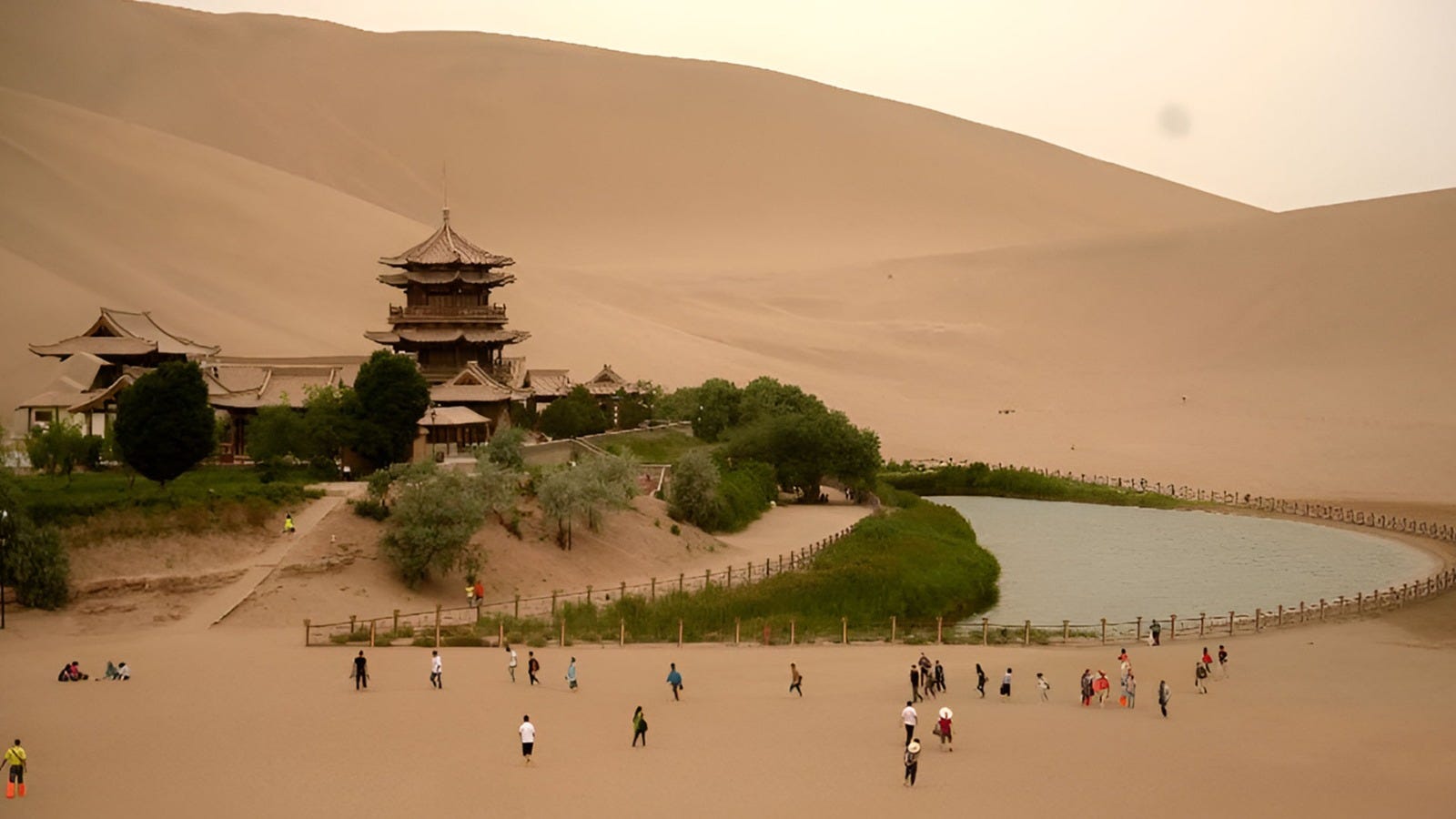
Somewhere in one of the most inhospitable places on Earth, rows of green saplings are taking root in sand where nothing much grows. And no, this isn’t some vanity tree-planting project.
China is growing rubber in the Gobi Desert.
That sounds absurd, doesn’t it?
After all, rubber trees need tropical humidity, steady rainfall, and temperatures that don’t plunge below freezing point. The Gobi offers none of that. Yet Chinese scientists have been tending these plantations since 2016.
And by now, what started as 14 hectares of experimental land has turned into an ambition to cultivate 3.3 million hectares of rubber-yielding trees by 2030.
However, this move is more about geopolitics than agriculture.
Let’s find out how.
The Rubber Dependency Problem
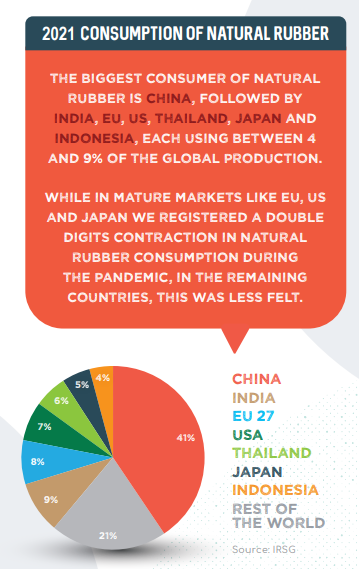
China consumes over 7 million tonnes of natural rubber annually. That’s more than any other country on Earth. But there’s a catch. Over 85% of that rubber comes through imports. Thailand, Indonesia, Malaysia, and Vietnam collectively control the bulk of China’s rubber supply.
And that makes Beijing very, very nervous.
Think about where this rubber ends up: tyres for military vehicles, seals for aircrafts, shock absorbers for tanks, stealth coatings on submarines and what not.
Natural rubber is in over 50,000 products, and for high-performance applications, especially those used by militaries, synthetic rubber is not a suitable alternative.
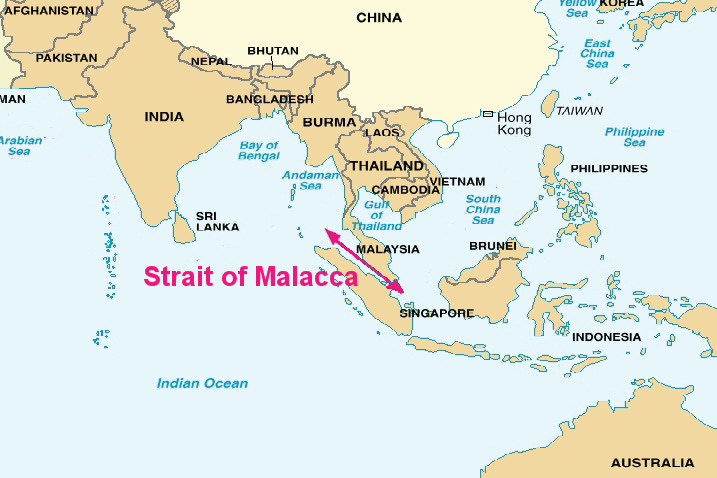
Now consider the shipping routes. Most of China’s rubber imports pass through the Strait of Malacca and the contested South China Sea. In a conflict scenario, these lifelines could be cut.
China’s strategists know this. And they’ve decided they can’t afford to rely on rubber from places they don’t control.
The obvious question is, “Why not just grow more rubber trees at home?”
Biology answers this aptly. The primary rubber tree, Hevea brasiliensis, is a tropical diva.
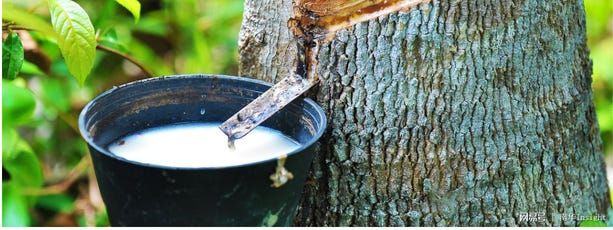
It flourishes only in hot, humid climates near the equator. China’s southernmost region, Hainan Island and Yunnan province. Hainan Island has about 523,000 hectares of rubber plantations that produce roughly 348,000 tonnes annually, together they contribute around 95% of China’s total production. Which is well below China’s annual demand of 7 million tonnes.
And that’s pretty much the ceiling. Push further north, and winter cold kills the trees. Push into remaining tropical forests, and you create an environmental disaster. Yunnan’s Xishuangbanna region already sacrificed huge swaths of rainforest for rubber monoculture.
There’s also a disease risk. Monoculture plantations are famously vulnerable to a fungal disease, blight. The same disease that destroyed Henry Ford’s disastrous Amazon rubber venture in the 1920s. A new outbreak could devastate Asian plantations overnight.
So China found itself in a bind. It couldn’t grow enough traditional rubber at home. It couldn’t fully trust the foreign supply. And simply buying overseas plantations (which it has been doing in Africa and Southeast Asia) doesn’t solve the core problem: supply still passes through choke points.
The solution had to break the mould entirely.
Enter the Hardy Rubber Tree
This is where Eucommia ulmoides enters the story.
Locally known as Duzhong, it’s an unassuming deciduous tree native to central China. Traditionally, it was cultivated for its medicinal bark, a staple of Chinese herbal medicine. But Duzhong has a secret: it produces rubber. But not quite the same kind as Hevea. Technically it’s trans-polyisoprene rather than cis-polyisoprene, but usable nonetheless.
Trans-polyisoprene in Duzhong is tough, whereas cis-polyisoprene in natural rubber is more elastic. Unlike delicate tropical rubber trees, Duzhong can tolerate temperate climates, even frosty winters. It handles drought once established. It grows in zones where Hevea would die within weeks. The fruit peel contains 15-18% rubber by weight, the bark 8-10%, the leaves 2-3%. Tear a Duzhong leaf, and you’ll see stringy latex fibres stretching between the halves.
For years, this was more botanical curiosity than industrial reality. Yields were modest and extraction was difficult. Hence nobody took it seriously as a commercial rubber source.
But as China’s import dependency became glaring, scientists at Northwest A&F University launched a crash programme to transform Duzhong into a strategic crop.
They bred over 50 elite strains optimised for rubber content and desert survival. They developed new extraction technology with low-temperature solvents and biotech enzymes that can process leaves, bark, and fruit efficiently.
The result: a rubber source that can grow in the Gobi.
And here’s where the economics gets interesting.
Normally, growing rubber in a desert would be commercial madness. Factor in irrigation costs, soil amendments and processing infrastructure. None of this competes with cheap rubber from Thai plantations operating in perfect conditions.
But China isn’t optimising for commercial markets. It’s optimising for security.
And the People’s Liberation Army is willing to pay.
Laboratory tests show that adding just 3-5% Duzhong rubber to conventional compounds significantly boosts durability and wear resistance. Tyres last longer. They’re more puncture-resistant. Perfect for military vehicles operating in extreme conditions. Duzhong rubber also works in electromagnetic shielding composites, useful for stealth coatings and radar housings.
So the PLA becomes an anchor buyer. Even if desert-grown rubber costs more than imports, the military will pay a premium for guaranteed domestic supply. National security planners put reliability above cost-efficiency. The extra expense becomes an insurance premium: money paid to mitigate catastrophic supply risk.
This isn’t unusual. Governments routinely subsidize industries for strategic reasons. The US Defence Department underwrites semiconductor R&D. Nations maintain strategic oil reserves at high cost. China is essentially creating a “strategic rubber reserve” spread across millions of hectares of an otherwise useless desert.
The Bigger Playbook
If this strategy sounds familiar, it should.
China has a well-documented pattern of identifying critical vulnerabilities and throwing state resources at fixing them. Semiconductors. Rare earths. Energy. The playbook always looks the same: long-term government planning, heavy R&D investment, integration of civilian and military objectives, and scaling up by fiat.
The National Duzhong Industry Development Plan runs from 2016 to 2030. It’s overseen by the State Forestry Administration with likely military input. The goal isn’t just rubber, it’s also fighting desertification. Plant rubber-producing trees in the desert and you get two wins simultaneously.
From 14 hectares in 2016, China now cultivates roughly 300,000 hectares of Duzhong nationwide. The target is 3.3 million hectares by 2030, including 300,000 hectares in Xinjiang alone. Only in China would such a scale-up sound plausible, accomplished through the same central planning that laid down tens of thousands of kilometres of high-speed rail in a decade.
Should Anyone Else Worry?
Not immediately.
Even if China hits its 2030 targets, global rubber demand by then could reach 16-20 million tonnes annually. Duzhong plantations might produce one or two million tonnes at full capacity. Now, this is significant, but nowhere near enough to satisfy China’s own needs, let alone flood world markets. Southeast Asian producers aren’t losing their markets anytime soon.
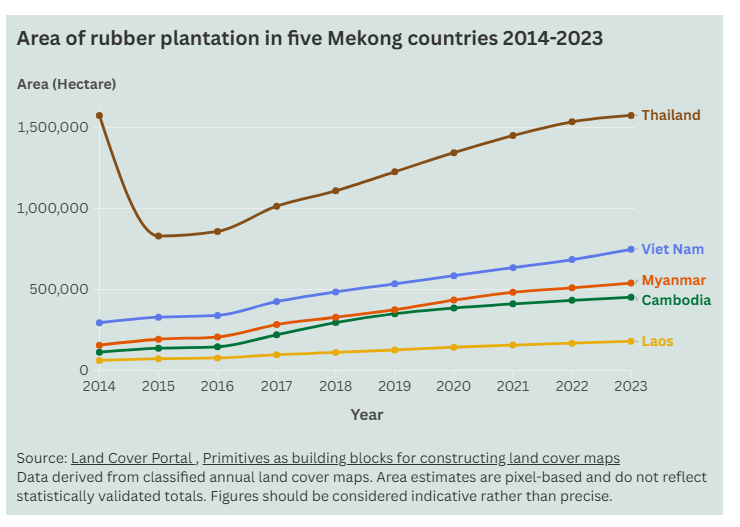
Cost competitiveness remains questionable, too. Traditional rubber cultivation benefits from ideal climates, decades of agronomic optimisation, and established infrastructure. Desert rubber is experimental and likely costlier per unit. China isn’t aiming to export this rubber anyway — it’s strictly for domestic resilience.
But the ripple effects are worth watching.
Other nations are running parallel experiments too. American researchers are breeding special dandelions that produce latex in their roots. Continental has already made prototype bicycle tyres from dandelion rubber. Everyone is suddenly asking the same question China asked: if the rubber supply collapsed, what would we do?
The Takeaway
The image that lingers here is almost surreal. Green trees swaying in desert wind, rooted in sand but thriving through human will and technology.
But what this project reveals is more important than whether it succeeds.
It shows how China thinks about supply-chain risk. Not as a business problem to be optimised, but as a national security vulnerability to be eliminated.
The key insight here is: In a world of fractured supply chains and geopolitical tension, the nations that think furthest ahead about securing critical materials might be the ones standing strongest when the next disruption hits.
China isn’t betting on stable geopolitics. While, India still is.
Until deserts grow green, ReadOn!